
-
 Shopping Cart (0)
Cart Total:
Your cart is currently empty..
Vape Troubleshooting
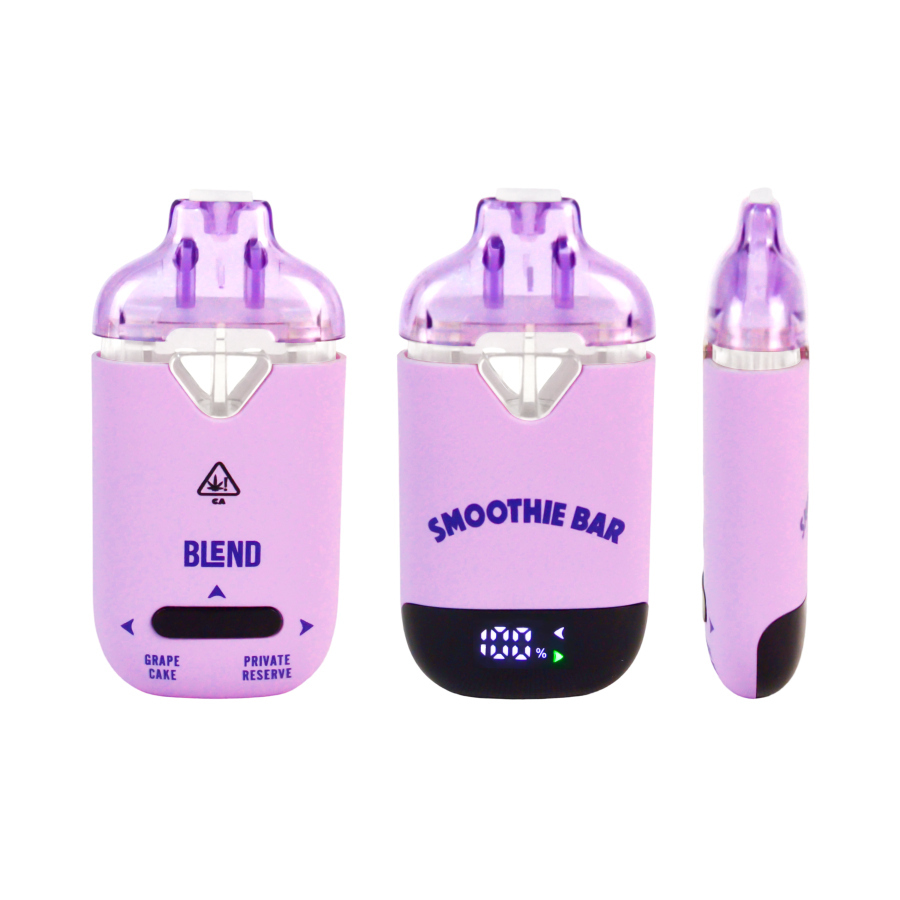
Adjustable Voltage vs Fixed Output Vape Hardware: Performance, Heating & Oil Compatibility
- Tuesday, 22 September 2026
- 0
- 213
- 0
Voltage control is one of the key factors that influences vape hardware performance.
Adjustable voltage and fixed output systems use different approaches to manage heating. Adjustable systems provide flexibility across different oil formulations, while fixed output devices prioritize simplicity and consistent operation.
For brands and wholesale buyers, understanding the differences between these two designs helps select the right hardware platform for specific oil types and product requirements.
Key Takeaways
- Voltage output directly affects heating behavior and vapor consistency.
- Adjustable voltage hardware allows brands to support different oil formulations.
- Fixed output hardware provides simpler operation with fewer user adjustments.
- Coil material, resistance and airflow design influence performance together with voltage.
- OEM buyers should evaluate voltage range, battery output and heating compatibility before production
Voltage and Flavor Basics
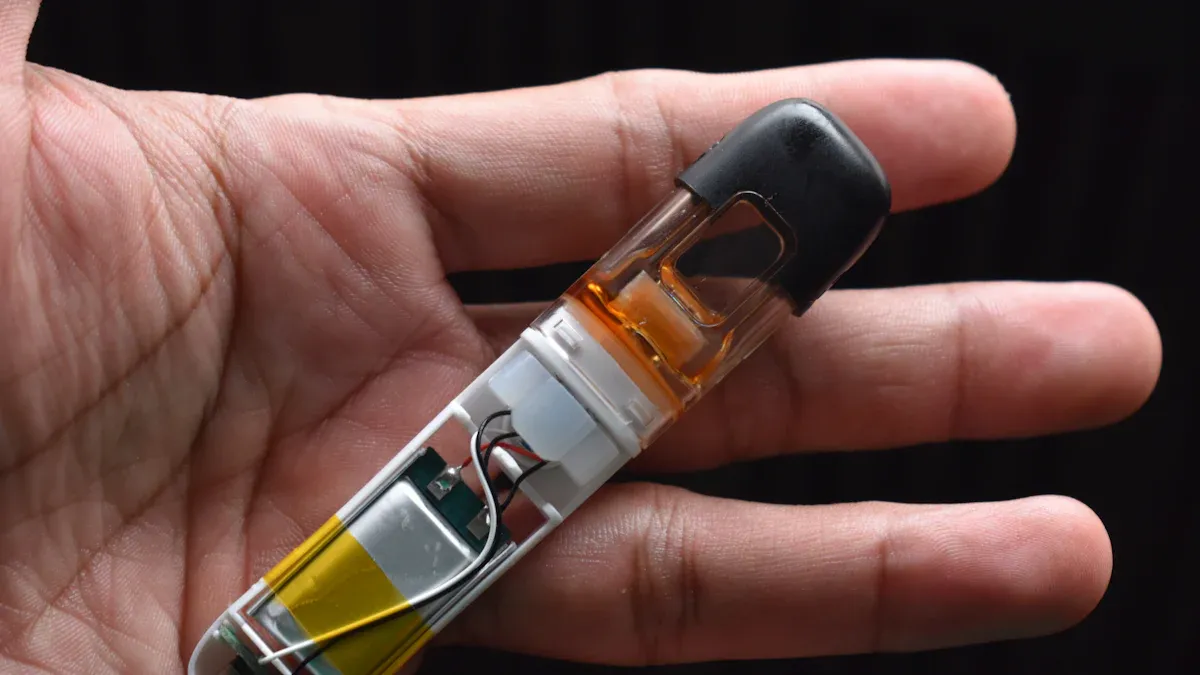
Voltage controls how much heat reaches your cannabis oil. Voltage influences electrical power delivered to the heating element. Actual coil temperature depends on multiple variables, including resistance, coil material, airflow and oil characteristics. The heat decides which flavor compounds make it through. Knowing this chain helps you pick better hardware for what you need.
How Heat Affects Terpenes
Terpenes give cannabis its special flavors and smells. Every terpene boils at its own temperature. Different compounds respond differently to heat. Excessive temperatures may change flavor characteristics, which is why controlled heating is an important consideration in hardware design.
Here are three common terpenes and their boiling points:
| Terpene | Boiling Point (°C) | Boiling Point (°F) |
|---|---|---|
| α-Pinene | 155 | 311 |
| Myrcene | 168 | 334 |
| Limonene | 176 | 349 |
Myrcene shows up in many indica strains. It gives a pine-like smell. Limonene brings citrus notes. Pinene smells like fresh pine needles. These fragile compounds need careful heat control.
Your device voltage changes temperature directly. Higher voltage heats the coil faster. It shoots past these boiling points quickly. You ruin valuable terpenes before they reach your mouth. Lower voltage heats more gently. It saves more of these compounds. You taste the full profile of your concentrate.
Fixed-output devices lock you into one temperature. If that temperature goes above 176°C, you lose limonene and other high-boiling terpenes. You cannot change it. Adjustable voltage gives you control. You match the heat to your specific oil.
Vapor Temperature and Taste
Vapor temperature matters just as much as saving terpenes. Hot vapor bothers your throat. It covers up subtle flavor notes. Cooler vapor feels smooth. You notice more details in each draw.
Higher voltage makes hotter vapor. Research backs up this link. Hotter vapor often leads to harshness and flavor loss. You see bigger clouds. But the taste quality drops a lot. The experience gets uncomfortable after repeated hits.
Lower voltage makes cooler vapor. You get more flavor from each draw. The session stays comfortable. You taste differences between strains clearly. The trade-off is less visible vapor production. Most flavor chasers accept this gladly.
Fixed-output pens cannot change temperature. You cannot respond to different concentrates. Some oils need lower heat for best flavor. Others need a little more. Adjustable voltage fixes this problem. You dial in the exact heat for your oil. You hit the best range every session.
The Voltage Flavor Sweet Spot
Most cannabis cartridges perform best between 3.2V and 3.7V. This range balances flavor and vapor production. Go below it and you get weak hits. Go above it and you risk burning terpenes. Many cartridge systems operate within common voltage ranges, but the optimal setting depends on coil resistance, heating material and oil formulation. That setting works for standard distillate oils. It sits at the top of the sweet spot. But it leaves no room to adjust for delicate concentrates.
Adjustable Voltage's Fine-Tuning Advantage
Adjustable voltage lets you move within the sweet spot and beyond it. You match the heat to the cartridge in front of you. Live resin and high-terpene oils perform best at 2.4V to 2.8V. Distillate works at 3.2V to 3.6V. A medium setting around 3.2V gives flavorful, sizable hits. A high setting near 4.0V delivers bigger clouds but sacrifices taste. You decide which trade-off matters for your session.
This flexibility answers the question of which vape hardware tastes better for flavor chasers. Bestvapesupply offers adjustable 510 thread batteries that let you hit this sweet spot precisely. You dial in the exact voltage for each cartridge. No more guessing whether your pen runs too hot. No more burnt hits from a fixed setting. You taste the full profile of every oil you load.
How Voltage Control Affects Empty Vape Hardware Design
Voltage selection influences several hardware decisions:
• Battery capacity
• PCB design
• Coil resistance
• Heating element selection
• Preheat function
• Temperature management
Comparison: Which Vape Hardware Tastes Better?
You now get the voltage sweet spot and how heat shapes flavor. The next step is a direct comparison of the two hardware types. Each one goes after taste in a different way.
Adjustable Voltage for Flavor Control
Adjustable voltage puts you in charge of the flavor profile. You pick the voltage level for each cartridge or e-liquid you load. A lower setting saves delicate terpenes. A higher setting pushes more vapor. Flavor and vapor perception may change with the voltage level you pick. That change is the whole point. You fine-tune settings for different e-liquids or draw styles.
Think about a real example. You load a live resin cartridge with strong citrus notes. You set your battery to 2.8V. The vapor stays cool and the limonene comes through clearly. Later, you switch to a standard distillate oil. You raise the voltage to 3.6V for a fuller hit. A fixed device cannot make that switch. You would get the same heat for both oils. One of them would taste wrong.
This control matters when you ask which vape hardware tastes better for your own collection. The answer depends on your oils. A setting that suits one e-liquid may not suit another. Adjustable voltage gives you controlled choice within a tested range. You test, adjust, and lock in your personal sweet spot.
Fixed Output for Consistency
Fixed output takes the opposite approach. The device delivers one pre-designed output pattern every time. You press the button and draw. Flavor follows that pattern with no user adjustment. The result is a consistent but inflexible flavor profile.
Consistency has real value. You never wonder if you left the voltage too high. You never burn a coil because you forgot to change a setting. For a beginner, this simplicity removes a whole layer of decisions. Many users find that a fixed pen set at 3.7V tastes great with standard distillate. The device hits the top of the sweet spot and stays there.
The limitation appears when your needs change. A fixed pen cannot drop to 2.4V for a terpene-rich oil. It cannot rise for a thicker concentrate that needs more heat. You get one temperature for every cartridge you own. Higher output does not automatically mean better flavor either. Flavor perception depends on coil resistance, airflow, liquid formulation, and draw length. Voltage adjustability is only one factor in the mix.
So which vape hardware tastes better? Adjustable voltage provides greater flexibility, while fixed output offers simplicity and consistency. The better option depends on oil type, hardware design and product goals. Fixed output wins on simplicity. A fixed device can taste excellent if the factory setting matches your oil. An adjustable device can taste excellent across many oils. Your choice comes down to how many different concentrates you use and how much control you want.
Beyond Voltage: Coils and Concentrates
Voltage gives you control over temperature, but the coil in your hardware and the kind of oil you use matter just as much for taste. These two things decide how well the heat reaches your concentrate and whether delicate flavors survive the trip.
Coil Quality’s Role in Taste
The coil is the part that turns voltage into heat. Its material and design decide how evenly that heat spreads across your oil. An uneven coil burns one spot while leaving another spot too cool. That ruins flavor fast.
Different coil materials give different results. Here is how they compare:
| Coil Material | Flavor Preservation | Heat-Up Speed | Best Use Case |
|---|---|---|---|
| Ceramic | Best; does not burn like cotton, gives a pure, clean taste that highlights terpene profiles | Slower than quartz | Premium cartridges; live resin oils |
| Quartz | Less refined than ceramic; rapid heat can instantly vaporize high-terpene oils | Fast (5–10 seconds) | Dense vapor clouds |
| Cotton Wick | Clean taste but flavor fades faster; can burn if not fully soaked | Quick | Budget pens; thinner oils |
Ceramic coils hold terpene-rich oils well. Premium vape cartridges often use ceramic as their heating element. If flavor matters most to you, ceramic is your best bet.
Resistance also shapes your experience. Low resistance (0.15–0.6Ω) lets more power flow, which makes more heat and bigger clouds. High resistance (0.8–1.2Ω) uses less power and makes less vapor but keeps flavor better. For flavor-first vaping, lower-temperature settings work best. Mesh coils spread heat evenly across a wide surface, which cuts down dry hits and keeps flavor steady. Regular coils can form hot spots that burn your oil.
Concentrate Type Matters
Not all oils handle heat the same way. Distillate and live resin need different voltage ranges to taste their best. Using the wrong setting wastes flavor.
| Concentrate Type | Ideal Voltage Range | Notes |
|---|---|---|
| Distillate | 3.2V – 3.6V | Heats well without burning. If harsh at 3.6V, drop to 3.2V. |
| Live Resin | 2.4V – 3.0V | Richer terpene profile than distillate; high voltage destroys it. Most users land around 2.8V. Beginners start at 2.4V. |
Distillate is a thinner oil that heats up fast. A voltage around 3.2V to 3.6V gives solid vapor without burning. Live resin has delicate terpenes that boil away at higher temperatures. Going over 3.0V can destroy the flavor advantage that makes live resin special.
This is where voltage control becomes key. A fixed pen set to 3.7V may work fine for distillate but will ruin a live resin cartridge. An adjustable battery lets you match the heat to your concentrate. You save every note the oil maker intended.
The coil and the concentrate work together. A ceramic coil with low voltage and a live resin cartridge gives you the most flavor. A cotton wick at high voltage with distillate gives you clouds but loses subtlety. Pick your hardware based on what you plan to vape most.
Hardware Design Comparison
| Feature | Adjustable Voltage | Fixed Output |
|---|---|---|
| Output Control | Multiple settings | Single output |
| Hardware Complexity | Higher | Lower |
| Oil Compatibility | More flexible | Depends on factory setting |
| User Adjustment | Required | Minimal |
| Battery Design | More advanced control system | Simpler electronics |
| OEM Application | Premium/custom products | Standard platforms |
Practical Tips for Flavor Maximization
You now know how voltage, coils, and concentrates change taste. These easy tips help you get the best flavor from your hardware every time.
Start Low, Adjust Up
Beginners can begin with a fixed-output pen set to 3.7V. That voltage works well with most pre-filled cartridges. Button-operated 510 thread batteries also work well around 3.7V. If you use ceramic or wickless cartridges, stay at 3.7V or higher. Lower voltages may not give enough power for those designs.
Flavor chasers should buy an adjustable battery. Start at the lowest voltage and work your way up. Follow these steps to find your own sweet spot:
- Set your device to the lowest voltage setting.
- Take a small puff and breathe in slowly for one to two seconds.
- Pause and notice how the flavor tastes.
- Adjust little by little until you find your perfect hit.
Many users end up between 3.3V and 3.6V on cartridges. That range gives fuller vapor without losing flavor or smoothness. Fruit and menthol e-liquids often taste better at lower temperatures. Desserts and tobaccos do better with higher heat.
Lower temps bring out citrus, pine, and herbal notes. As heat goes up, flavor fades and the vapor feels warmer.
Choose BestVapeSupply for Precision
Bestvapesupply offers adjustable 510 thread batteries that let you set exact voltage levels. You test different levels and lock in your own sweet spot. Lower voltage often gives better flavor, so try things out until you find what works for your oils.
Bestvapesupply also provides OEM services for custom voltage solutions. Voltage options range from 1.8V to 3.6V, and coil resistance from 1.2 ohm to 2.5 ohm. These options match specific heating needs for different oils. OEM manufacturing includes strict 100% full-inspection QA/QC protocols. with quality inspection procedures covering appearance, functionality and assembly consistency.
Adjustable voltage control through OEM services helps protect the terpene profile and keep the intended flavor of the oil.
Adjustable Voltage Applications in OEM Vape Hardware
| Test | Purpose |
|---|---|
| Output voltage test | Verify electrical output |
| Battery test | Confirm power stability |
| Coil resistance test | Check heating consistency |
| Charging test | Verify safety |
| Aging test | Evaluate reliability |
Common Misconceptions Debunked
Many false ideas about vape hardware are out there. These myths often confuse people who ask which vape hardware tastes better. Learning the facts helps you make a smarter choice. Let us clear up two common misunderstandings.
Higher Voltage Equals Better Flavor?
You might believe a higher voltage always gives better taste. More heat means more vapor. More vapor should mean more flavor. This logic sounds simple. But it is not correct.
Higher voltage actually makes hotter vapor. According to Silver Stem Cannabis, this hot vapor makes your throat hurt more. A harsh vaping experience often comes from overheating the cartridge, not the oil itself. When you overheat your oil, you burn the delicate terpenes. These compounds create the unique flavor of each strain. The table below shows how different voltage ranges affect your hit:
| Voltage Range | Effect on Terpenes and Flavor |
|---|---|
| 2.7–3.0V | Preserves delicate terpenes and supports unique strain flavor |
| 3.1–3.3V | Produces bigger clouds and faster effects, but sacrifices nuanced taste |
| Too high / overheating | Burnt taste indicates the cartridge is getting too hot |
Higher settings lower flavor complexity. You get bigger clouds. You lose the subtle notes that make premium oils special. A lower voltage setting often gives you the best path to superior taste.
Fixed Output Is Always Inferior
The second myth says fixed-output devices can never taste good. This idea ignores the real benefits these devices offer.
Fixed voltage batteries are simple and cost-effective.
Many fixed pens leave the factory set to 3.7V. This voltage sits at the top of the sweet spot for standard distillate. For many users, this one setting is perfectly sufficient. It provides a consistent, satisfying experience every time. You do not need to guess or adjust settings.
Fixed output is not always inferior. It simply lacks flexibility. If you only use one type of oil that performs well at 3.7V, you do not miss much. The convenience factor is a genuine benefit. So, which vape hardware tastes better? It depends on your priorities. Adjustable voltage offers more control across different oils. A well-matched fixed pen can still deliver a great tasting hit.
Adjustable voltage usually gives you better flavor. You can fine-tune the heat to the 3.2V to 3.7V sweet spot. This keeps terpenes safe and stops burnt hits. Fixed output is simpler and can satisfy you if the factory setting already matches your oil. But it cannot adapt to different concentrates.
Try different settings on your own device to find your personal sweet spot. Try an adjustable battery from bestvapesupply to get richer flavor from every cartridge. The question of which vape hardware tastes better? comes down to control versus convenience. Which hardware do you prefer for taste? Let us know in the comments.
FAQ
Does a higher voltage setting give you stronger flavor?
No. Higher voltage creates hotter vapor. That heat burns delicate terpenes before they reach your mouth. You get bigger clouds and a harsher hit. A lower setting protects those flavor compounds. Most flavor chasers stay in the 3.2V to 3.7V range for this reason.
Can a fixed-voltage pen still taste good?
Yes, if the factory setting matches your oil. Many fixed pens ship at 3.7V. That voltage sits at the top of the sweet spot for standard distillate. You get consistent, satisfying hits with no adjustments. The trade-off is zero flexibility for other concentrates.
Which voltage works best for live resin?
Live resin needs gentle heat. Aim for 2.4V to 3.0V. Most users land around 2.8V. Going above 3.0V destroys the rich terpene profile that makes live resin special. Start at 2.4V and work your way up until the flavor feels right.
Does voltage alone determine flavor performance?
No. Flavor performance depends on voltage together with coil material, resistance, airflow, oil formulation and hardware structure.
How do you find your personal flavor sweet spot?
Start at the lowest voltage on your adjustable battery. Take a slow puff for one to two seconds. Taste the vapor. Raise the voltage little by little. Stop when the flavor feels fullest. Many users settle between 3.3V and 3.6V on standard cartridges.
## About This Article
Written by:
Best Vape Supply Hardware Engineering Team
Reviewed by:
Product Development & QC Department
Expertise:
• Voltage Control Systems
• Heating Technology
• Empty Vape Hardware
• Coil Engineering
• OEM Manufacturing
0users like this.
0comments
- Empty Vape Hardware
- OEM vape hardware
- Dual Chamber Vape Hardware
- Thick Oil Vape Hardware
- dual chamber vape hardware
- Disposable Vapes
- Packman 4G
- ACE Ultra
- ACE Ultra Vape Pen
- Empty Disposable Hardware
- postless vape hardware
- OEM Manufacturing
- Rechargeable vape hardware
- Dual Chamber Hardware
- 10/10 Boys Switch
- Fryd dual chamber vape
- Fryd vape pen
- Fryd 2g
- Fryd disposable 2ml
- DRANKS DUAL Disposable Vape
- dual flavors
- Vape Battery
- HITZ ZEUS EDITION 2G
- HITZ Infinity Blue 2ML Pens
- HITZ Infinity
- HITZ ZEUS
- Dual Chamber Vape
- 2g Disposable
- Dual Tanks vape pen
- Disposable Vape Pens
- Wholemelt Phase Five Switch Vapes
- Wholemelt Switch Vapes 2G
- Wholemelt Vapes 2G
- DUAL Disposable Vape
- 2ML Dual Tanks
- 2G Disposable Vape
- MUHA MEDS Gen
- Splitz Vape Pen
- Splitz Vapes 2G
- Muha meds 2G
- Splitz 2ml
- TURNONE 2ML Empty Vape Hardware
- TURNONE 2ML
- customization
- 2ML Empty Vape
- ACE 2ml Vapes
- Packman 2ml vapes
- Whole Melt Candy Shop Switch 2G
- Whole Melt Candy Shop Switch
- dual-chamber
- OG Cake
- Cake 2ml vapes
- OG Cake Vape Pen
- Cake 2G Vapes
- MUHA MEDS Gen 3
- Muha meds 2ml
- Muha meds Switch
- Muha Meds 2.5G
- Sherbinskis Quattro 2G
- activation failure
- FAVORITES Disposable 3G
- Disposable 3G
- FAVORITES Disposable
- FRYD SWITCH DISPOSABLE 2G
- FRYD Switch 2G
- disposable vape
- FRYD 2g
- Dual Chamber Pens
- HITZ ZEUS Edition 2G
- MUHA MEDS Melted Diamonds vape
- HITZ ZEUS 2G
- MUHA MEDS Melted Diamonds 3.5G
- Push V2 Summer Vape Pen
- Push V2 Summer Vape Switch
- Push 2G Vape Switch
- Push 2G Switch
- Boutiq Switch ORB V5 Triple Tank
- Boutiq Switch ORB V5
- Boutiq Switch
- Triple Tank Vape
- Packman Partyboyz Disposable Vape
- Packman Partyboyz 3G
- Packman vape pen
- Packman 2g vapes
- Raw Garden Adjustable Voltage
- Raw Garden 2G
- Raw garden Vapes
- Raw garden vape pen
- MUHA MEDS Empty Vape Pen
- SHERBINSKIS QUATTRO 2G
- MUHA MEDS 2g Vape Pen
- dual chamber Vape Pen
- Muha Meds empty vape
- 3.5ML Muha Meds
- Muha Meds 2ml
- Crybaby Trios 3G
- Crybaby Trios 3G Empty Disposable Vape
- disposable vape hardware
- Muha Meds Gen 3 empty hardware
- HitZ Infinity 2G empty hardware
- Slugger Hit 3G Triple-Chamber Vape
- Multi-Flavor Hardware
- disposable empty hardware
- Airflow Blockage
- Thick Oil Empty Vape Hardware
- thick oil vape cartridge
- OEM empty vape hardware
- DONUTS Switch GEN 2 E
- 2ML Dual Chamber Vape
- DONUTS Switch Pen 2ML
- Boutiq Switch V5
- Boutiq Dual Chamber
- Empty Vape Hardware Quality Control
- LUIGI V9 2G Empty Vape Hardware
- Donuts Gen 2 Dual Chamber
- Sprinklez Disposable Vape
- Sprinklez Disposable 2G
- Muha meds glass jars
- ACE Glass jars
- custom packaging
- UNIPUFF SWITCH DISPOSABLE 2G
- Muha Meds GTA edition
- Alien Labs Dual Empty Disposable 2G
- Alien Labs Dual
- vape pen overheating
- vape hardware troubleshooting
- vape battery overheating
- Raw Garden Vape Pen
- Ceramic Coil
- rechargeable disposable
- 2ML Empty Vape Hardware
- OG Cake Legendary Edition
- CRYBABY TRIOS 3 IN 1
- Multi-Chamber Vape
- manufacturing process
- BIG CHIEF DUO V3 Empty Vape Hardware
- Single Chamber Vape Hardware
- Sluggers Hit dual chamber
- OEM vape manufacturer
- 510 Thread Vape Cartridge
- Dual chamber
- LED screen devices
- All-In-One Vape Hardware
- Dual Vape Hardware
- 510 cartridge hardware
- ceramic vape cartridge
- OEM cartridge supplier
- ACE Ultra 2ml Dual Chamber
- Donuts Switch V4 Dual Chamber
- Single-Chamber Disposables
- Ceramic Coil Guide
- Thick Oil Hardware
- CALI CLEAR 2G
- Oil flow problems
- Ace Ultra Switch
- Ace Ultra Premium Empty Vape Hardware
- LED screen vape hardware
- Smart vape hardware
- Voltage Control
- Buzz Bar 3G Switch
- 10/10 Boys Single Flavor
- multi chamber vape hardware
- Sluggers Dual Chamber
- SMOOTHIE BAR BLEND 3.0 Switch
- Switch Empty Vape Hardware
- Multi-Chamber Empty Vape Hardware
- vape hardware airflow
- multi-chamber hardware leakage
- BESOS 3 Flavors Switch
- BESOS 3 Flavors Switch Empty Vape Hardware
- Slugger Hit 3 tanks SWITCH 3G
- 10/10 Boys Switch clogging
- SHERBINSKIS QUATTRO 2G dual chamber vape hardware
- Packman x Jeeter DUAL CHAMBER Vape Hardware
- 2G disposable vape
- Empty Triple-Chamber Vape Hardware
- OEM triple chamber vape hardware
- postless dual-chamber vape hardware
- ceramic vape hardware
- triple chamber vape hardware
- 1mL + 1mL dual-chamber vape
- dual-chamber empty vape hardware
- Khalifa Kush Switch
- HOLLOWTIPS 2G vape hardware
- HOLLOWTIPS 2G empty vape
- Hollow Tips 2G empty vape
- Hollowtips V1 empty vape hardware

Your cart is currently empty.