
-
 Shopping Cart (0)
Cart Total:
Your cart is currently empty..
Empty Vape Hardware Guide
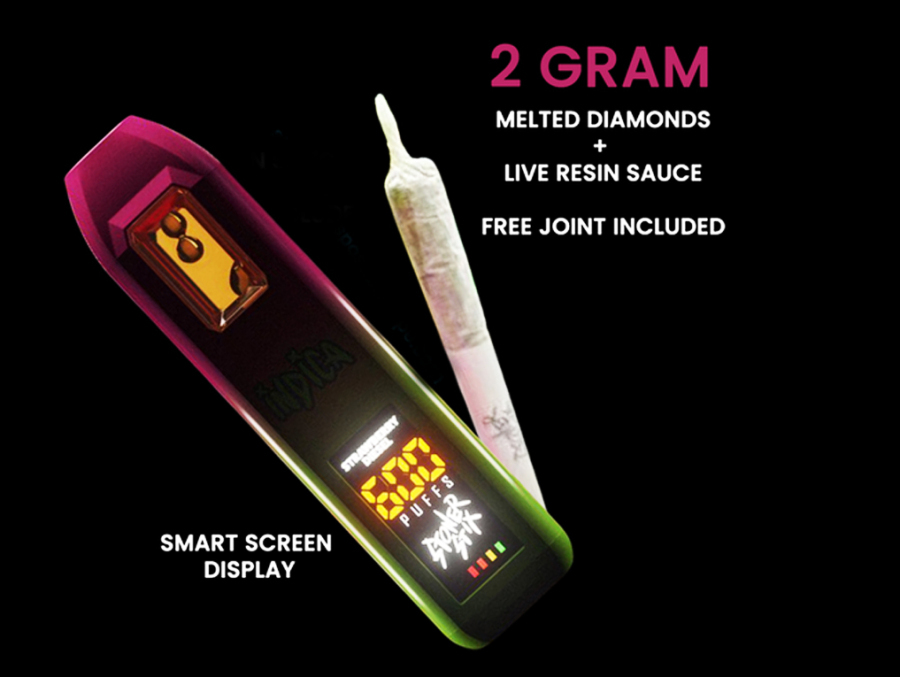
OEM Vape Hardware Manufacturing Process: From Prototype to Mass Production
- Saturday, 05 September 2026
- 0
- 228
- 0
Developing a successful empty vape hardware product requires more than selecting a device design. It involves engineering evaluation, prototype testing, quality control and reliable manufacturing processes.
For brands, distributors and wholesalers, understanding the OEM vape hardware manufacturing process helps reduce development risks and improve product consistency.
This guide explains each stage, from initial concept and prototype development to mass production and final delivery.
Key Takeaways
✓ A successful OEM vape hardware project starts with clear specifications and production goals.
✓ Prototype testing helps identify structural, airflow and heating issues before mass production.
✓ Quality control processes are essential for consistent hardware performance.
✓ Material selection, battery design and coil technology directly affect final product quality.
✓ Choosing an experienced OEM partner reduces production risks and improves launch efficiency.
The OEM Vape Manufacturing Process: From Concept to Production
Every successful vape product starts with a clear idea. You might picture a sleek disposable pen for a certain group of people. You might think of a refillable pod system with different flavor choices. These first thoughts build the base of your whole project. The first step of OEM vape manufacturing turns your rough idea into a clear plan. This step decides if your product will do well or fail in a busy market.
Defining Your Product Vision and Goals
Begin by defining your product vision with care. Ask yourself some key questions. Who will use your device? What issue does it fix? What price will you aim for? These answers shape every choice that comes next. You also need to think about your brand image. Does your company focus on high quality or low cost? Do you want simple, clean designs or bright, bold looks? Your answers guide the whole development process.
Write down your main details. Pick the device shape, size, and materials. Choose your battery type and coil setup. Decide on airflow design and how much oil viscosity it holds. Set nicotine strength, PG/VG ratio, and flavor choices. Think about extras like colors, LED lights, or screens. Each choice affects cost, performance, and how users feel about it.
Your vision should also include practical targets. Set a launch date for your product. Decide your budget range. Define how many units you want to sell. These limits help you talk clearly with possible manufacturing partners. A fuzzy idea leads to fuzzy results. A detailed plan leads to a product that meets your hopes.
The Manufacturer's Role in Feasibility Studies
Once you set your vision, the manufacturer checks if it can work. This step involves honest technical review. The factory looks at your idea against real production limits. They see if your design can be made well. They check if your materials meet safety rules. They find out if your cost goals match what production really costs.
A trusted manufacturer runs a full feasibility study before starting production. This study looks at several things. First, they check your technical details for consistency. Second, they see if parts are available from approved suppliers. Third, they look for possible production issues. Fourth, they estimate realistic timeframes for making your product. This review stops costly surprises later on.
The first talk usually follows a set order. You contact the manufacturer to explain your project scope. You discuss terms about specs, amounts, pricing, and quality standards. You sign a formal agreement that protects both sides. The manufacturer then builds your product design, gets parts, and makes first samples for you to check.
bestvapesupply offers help that turns your idea into a workable product plan. Their team works with you to spot issues early. They give honest advice about design choices. They offer other options when your first idea hits production problems. This team effort makes sure your vision becomes a product that can be made.
During this stage, expect several rounds of talks. The manufacturer might ask more about your target market. They might want extra details about your branding needs. They might suggest changes that make production easier without hurting your vision. Welcome this input. A good manufacturing partner wants your product to succeed just like you do.
The feasibility study ends with a clear answer. The manufacturer either says your idea can work or suggests changes. This honest review saves you time and money. You avoid putting money into a design that cannot be made well. You feel sure that your product can move to the next step with realistic expectations.
Finalizing Product Specifications
Once the feasibility study shows your idea can work, you move to the specification stage. This step turns big ideas into exact numbers and clear choices. Every small detail is important. One tiny mistake in a specification can cause big problems during mass production. You must write down everything clearly before any tooling starts.
Core Components and Technical Parameters
Your device's performance depends on three main parts: the battery, the coil, and the oil chamber. Each part needs specific numbers that decide how your product works.
Battery capacity tells you how long your device can run before you need to charge it. For disposable vapes, the capacity changes based on device size. Small disposables usually have batteries from 280mAh to 400mAh. Big disposables with 10,000 or more puffs need larger batteries, often from 500mAh to 650mAh. Standard disposable devices are in the 200mAh to 400mAh range. You must pick a battery that matches your target puff count.
Coil resistance changes how much vapor and flavor you get. Most disposable vapes use mid-to-high resistance coils. Lower resistance coils make more vapor but use battery power faster. Higher resistance coils give a tighter pull and use less power. Your choice depends on what your target users like.
Oil viscosity capacity works with battery size. A bigger tank gives more puffs per device. But a bigger tank also makes the device larger and heavier. You must balance these factors carefully.
| Component | Parameter | Typical Range |
|---|---|---|
| Battery (small disposables) | Capacity | 280mAh - 400mAh |
| Battery (large 10,000+ puff) | Capacity | 500mAh - 650mAh |
| Battery (standard disposables) | Capacity | 200mAh - 400mAh |
| Coil | Resistance | Mid-to-high range |
Material Selection and Compliance Constraints
Your material choices directly affect safety and getting legal approval. You cannot choose materials just based on cost. Each part must meet strict rules for food contact and heat resistance.
The oil chamber needs food-grade plastic or glass. These materials stop harmful chemicals from getting into your oil viscosity. The mouthpiece also needs food-safe materials because it touches the user's lips. Ceramic heating elements give better flavor than metal coils. They also last longer and heat more evenly.
Your material choices affect which rules you must follow. Different markets have different rules. The FDA controls vaping products in the United States. The TPD controls products sold in Europe. Each rule-making body needs specific tests and paperwork. You must pick materials that pass these tests from the start.
Key point: Material selection is not just about performance. It decides if your product can legally enter your target market.
Work with your manufacturer to write down every material source. Ask for certificates of analysis for each batch. Keep records of all supplier qualifications. This paperwork becomes very important when you apply for certifications. A reliable partner like bestvapesupply keeps these records for you, making sure your product meets all standards before shipping.
Prototype Development and Fast Prototyping
Your final specs become real devices during the prototype stage. This step turns paper designs into working products you can hold, test, and check. The prototype answers one big question: does your product work as planned? You need this answer before spending money on expensive production tools.
Why Quick Changes Matter
Prototype work follows a clear schedule in the vape industry. Normal prototyping takes about 14 to 21 days. Some makers speed up this process a lot. Fast prototyping services give you working samples in just 7 days. That speed cuts the time by more than half. For urgent projects or seasonal launches, this faster pace really helps.
Several tools make this quick pace possible. 3D printing builds housing parts fast without waiting for injection molds. AI design checks spot size errors before making anything physical. A focused prototyping team works only on samples instead of handling many jobs at once. These tools together shorten the wait between you and the factory.
| Timeline Aspect | Standard Process | Fast Prototyping |
|---|---|---|
| Prototype development | 14–21 days | 7 days |
| Time reduction | Baseline | Over 50% faster |
| Transition to mass production | 4–6 weeks | 2 weeks |
Quick changes mean you can test many design options without spending too much. You might try two different mouthpiece shapes or three coil setups. Each version teaches you something useful. You find out what feels good, what makes great vapor, and what users may not like. This learning costs little at the prototype stage. Changes cost much more once production starts.
Checking Performance and Safety
Your prototype must pass tough tests before you approve it for mass production. These tests protect your brand name and your customers. They also stop costly recalls that could ruin your market launch.
Leak checks are among the most important tests. Your device must handle temperature shifts, pressure changes, and rough use without leaking oil. Testers fill prototypes completely and put them through many positions and conditions. Any leak means a sealing problem that needs fixing right away.
Battery safety testing checks the power source under stress. Testers look for proper voltage control, overheating protection, and short-circuit prevention. They also make sure the battery gives steady power as it drains. A battery that fades too soon ruins the user experience.
Puff count accuracy shows whether your device meets its stated claims. If you say 5,000 puffs, your device must deliver close to that number in normal use. Testers use automatic puffing machines that copy real user habits. They measure vapor output, flavor steadiness, and battery drain across hundreds of cycles.
This testing step is your last quality check before production. OEM vape manufacturing partners like bestvapesupply run these tests fully. They record every result for you to see. You approve the final prototype only when all tests pass every time. That approval starts the next step: pricing and production planning.
Quotation and MOQ Agreements
After you approve the prototype, the talk moves to money. You need a clear view of what your product costs to make. You also need to know how many units you must order. These two things shape your whole budget and business plan.
Understanding Cost Breakdowns
A detailed quote keeps you safe from surprise costs later. Ask for a full breakdown that lists every cost type. Tooling costs cover the molds and fixtures used to shape your device's parts. These one-time fees can be a large upfront payment. Material costs include the plastic, metal, glass, and electronic parts that go into each unit. Assembly costs cover the work needed to put everything together.
Unit pricing drops as your order size grows. Manufacturers spread their fixed costs across more units, which lowers the price per device. This economy of scale means you pay less per unit when you order 10,000 devices versus 1,000 devices. But you must balance these savings against your cash flow and storage space.
Ask for a quote that also lists packaging, quality testing, and certification fees. Some manufacturers include these costs in their base price. Others add them as separate line items. You need to know which way your partner works. Ask about payment terms, lead times, and what happens if you need to change your order after production starts.
Negotiating Minimum Order Quantities
Minimum order quantities vary a lot across the industry. For OEM production runs, the minimum usually starts at 5,000 to 10,000 units per flavor or design. The exact number depends on your product type. Disposable devices, cartridge systems, and open pod kits each have different production needs.
- OEM MOQ: 500 units
- ODM MOQ: 1,000 units
These lower numbers often apply to first test runs or simpler products. Complex devices with custom features need higher minimums because of tooling and setup costs.
You can negotiate better terms using several proven methods. The table below shows approaches that successful brands use.
| Strategy | Description |
|---|---|
| Tiered-MOQ Pricing | Different price levels for sample, pilot, and commercial batches, with clear extra charges for small runs to cover fixed costs. |
| Consignment/VMI | Supplier-managed stock at regional hubs; brands pull inventory and suppliers refill, easing cash flow. |
| Shared-Run Pooling | Combine multiple small orders with matching formulas into one production run, then split with trackable IDs. |
| Purchase Commitments | Promise annual or quarterly spending across multiple SKUs to get lower MOQs or tiered discounts. |
| Pilot Program Fees | One-time fee to fund faster testing, priority scheduling, and paperwork for small runs. |
You should also ask about reorder minimums. First runs may have relaxed minimums to build the relationship. Separate the base hardware MOQ from the customization MOQ. This split stops you from overcommitting inventory for custom colors or logos. Treat MOQ as a negotiable term, not a fixed rule. Choose suppliers who offer flexibility and clear communication.
Mass Production and Quality Control
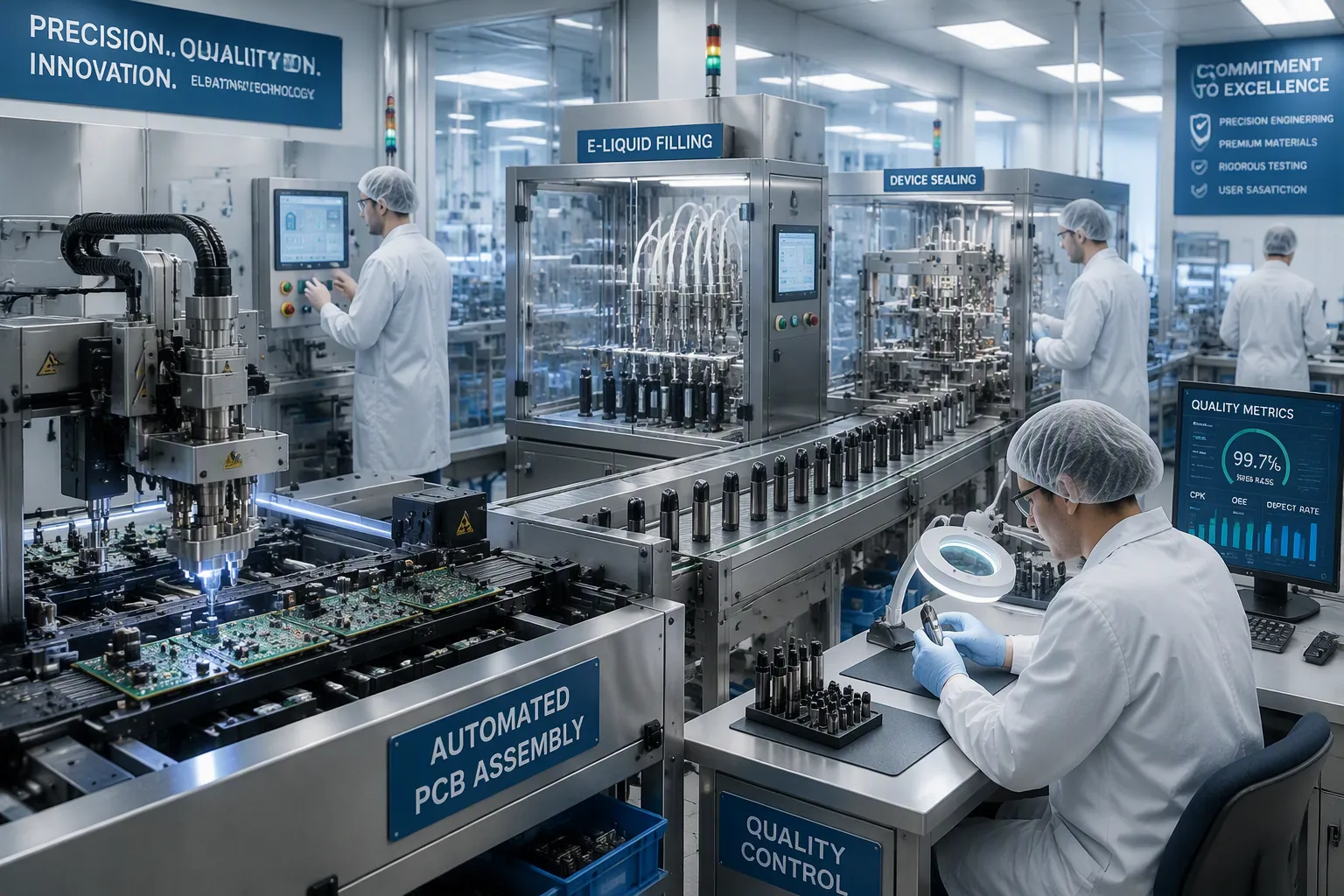
Mass production begins two weeks after you approve the final prototype. The process takes four to six weeks for most vape devices. This stage turns your approved design into thousands of matching units. You need a strong quality system in OEM vape making to ensure each device is like the prototype. A good partner uses certified factories and strict checks during production.
The Production Line and Assembly Process
Your devices move through a well-organized production line. The line starts with machines placing electronic parts. Workers put batteries into the housing. Machines install coils and wicking material. The system fills each device with oil viscosity using exact volume controls. Sealing stations close the device to stop leaks. Final assembly adds mouthpieces and labels. Each step has a set time limit. The line stops automatically when any step takes too long. This automation cuts down on human mistakes and makes things more consistent.
Certified factories use ISO 9001:2015 quality management systems. This standard needs written steps for every process. You can track each device back to its production batch. Factories with ISO 9001 also follow FDA GMP and cGMP rules. These rules cover cleanliness, equipment calibration, and staff training. RoHS compliance means your materials meet European environmental standards. CE and UL certifications show the device is safe from electrical shocks and low interference. FCC certification checks that your device does not disturb other electronics. Battery safety rules protect against overheating and short circuits during production. Heavy metals testing makes sure your materials stay within safe limits for lead, mercury, and cadmium.
Your manufacturing partner should run the first production batch at a slower speed. This lets workers check each device before the line speeds up. You should visit the factory during this first run. You can see your product being made and approve the process. This first run also helps the factory adjust machine settings. Small changes in temperature or pressure can affect the final product. The slower pace lets operators find the right settings before full speed begins.
Implementing Pre-Production and In-Process Checks
Pre-production approval starts with a first article inspection. The factory runs a small batch of devices using the final production tools. You check these units against your approved prototype. You measure dimensions, test function, and verify materials. The inspection covers every part. The housing must match the design specs. The battery must fit securely. The coil must show the correct resistance reading. The oil viscosity volume must be within the allowed range. Any difference between the first article and the prototype means a problem. The factory must fix the issue before full production begins.
In-process checks happen at several points during production. The first check happens after battery insertion. Workers test each battery for voltage and connection. The second check happens after coil installation. Equipment measures coil resistance and checks for shorts. The third check happens after oil filling. Automated scales weigh each device to confirm the correct fill volume. Sealing integrity tests use pressure or vacuum to find leaks. The final check happens before packaging. Each device goes through a functional test that copies a user puff. The system counts the number of puffs and checks vapor output. Products that fail any test go to a separate area for analysis. The factory records the defect reason and takes corrective action.
These checks catch defects early. One bad battery does not ruin the whole batch. You remove the defective unit and continue production. This approach saves time and money. It also protects your brand reputation. Customers receive devices that work as expected. Reliable quality control builds trust with your customers and distributors.
Your OEM vape manufacturing partner should provide quality reports with each shipment. These reports show the results of each inspection point. You can see the pass rate, defect types, and corrective actions. This transparency builds trust and helps you improve future products. You can also use these reports to verify compliance with your own quality standards.
Compliance Checks and Certifications
Compliance decides if your product can enter a market at all. Great quality does not matter if regulators stop your shipment at the border. Each area has its own rules. You must understand these rules before you start mass production. A reliable partner handles these checks and makes sure every device meets the standards of your target markets before it leaves the factory.
Navigating Regulatory Landscapes (FDA, TPD)
The US and the EU have different rules for vape products. You need to know which rules apply based on where you plan to sell.
In the EU, vape products need CE marking before they can be sold. This mark shows they follow several rules. The TPD rule tells how to make and sell vape devices. The RoHS rule limits dangerous materials in your product. The EMC rule makes sure your device does not interfere with other electronics. The Low Voltage rule covers electrical safety. The GPSD rule protects users from harm. Each rule needs specific tests and paperwork.
The US takes a different approach. The FDA treats vape products as tobacco products. You must register your factory and list your products with the FDA. The FCC also requires marking for devices that send out radio signals. This applies to smart vapes with Bluetooth. You need FCC testing to show your device works within allowed limits.
Key point: You cannot sell a vape product in the EU without CE marking. You cannot sell one in the US without FDA compliance. These rules are fixed.
The Role of Testing Labs and Documentation
Testing labs check that your product meets rules. These independent labs run controlled tests on your devices. They check chemical safety, electrical performance, and durability. Their reports are your proof of compliance.
You need several types of documents. Certificates of analysis show the chemicals in your oil viscosity. Test reports show the results of safety checks. Declarations of conformity say your product meets specific rules. Technical files hold design drawings, material specs, and how it's made. You must keep these records organized and easy to find.
Your manufacturing partner should handle this paperwork for you. bestvapesupply works with approved testing labs. They track when certifications need to be renewed. They keep digital copies of every document. This saves you time and stops costly delays. When customs asks for proof of compliance, you can give it right away.
Packaging, Labeling, and Shipping Logistics
Your product leaves the factory floor. It then moves to packaging and labeling. This stage gets your device ready for store shelves and shipping around the world. You must follow strict rules for packaging and labeling. You also need a smart shipping plan. These two parts protect your brand and your customers.
Designing for Retail and Regulatory Compliance
Your packaging must meet legal rules in every market you enter. Child-resistant packaging is required for nicotine-containing vape liquids in the United States. The Child Nicotine Poisoning Prevention Act of 2016 made existing rules stronger. This act covers all vape products. Special packaging has a clear meaning: packaging that is very hard for children under 5 years old to open. It must also be easy for normal adults to use the right way.
- U.S. Federal Law: The Child Nicotine Poisoning Prevention Act (January 2016) made existing 'special packaging' rules (first set under the Poison Prevention Packaging Act of 1970) cover oil viscosity. This means child-resistant packaging is required for nicotine-containing vape liquids.
- Definition of Special Packaging: Packaging that is 'very hard for children under 5 years of age to open or get a toxic or harmful amount... within a reasonable time and not hard for normal adults to use properly.'
- Mandatory Coverage under U.S. PPPA: These vape-related products must have child-resistant packaging under federal law:
- E-cigarettes and liquid nicotine refills
- Vapes and vape refills
- Enforcement Body: The U.S. Consumer Product Safety Commission (CPSC) makes sure these rules are followed.
Canada has federal rules about child-resistant container (CRC) packaging for consumer chemical products. This includes vape products, plus cosmetics, pesticides, and pharmaceuticals.
You must also put nicotine warning labels on your packaging. The rules are different in the US compared to the EU/UK.
US legal requirement: Vape packaging must show a clear health warning about nicotine addiction. The standard example is: "This product contains nicotine. Nicotine is an addictive substance." No specific size or placement percentage is required.
EU/UK legal requirement: Each unit packet and any container pack must show the health warning: "This product contains nicotine which is a highly addictive substance". This warning must appear on both the front and back surfaces. It must cover 30% of that area.
Your packaging design must also look good on store shelves. You need to balance rules with branding. You can use custom colors, logos, and materials. But you must keep the required warnings clear and easy to see. bestvapesupply helps you design packaging that meets all rules while showing your brand well.
Managing Global Shipping and Warehousing
Once your packaging is ready, you need to ship your products worldwide. The shipping method you pick affects your cost and delivery time. Chinese manufacturers often ship to the US and Europe. The table below shows average transit times for different methods.
| Shipping Method | US Transit Time | Europe Transit Time |
|---|---|---|
| Air Freight | 5–8 days | 6–9 days |
| Sea Freight | 25–35 days | 20–28 days |
| China-Europe Railway | N/A | 15–20 days |
| Courier Services (DHL, FedEx, UPS) | 3–5 days (for samples, small orders) | 3–5 days (for samples, small orders) |
Air freight door-to-door usually takes 7–15 days. Sea LCL (less than container load) takes 30–50 days. Sea FCL (full container load) takes 25–50+ days depending on route. You choose based on your budget and timeline. For large orders, sea freight saves money. For urgent samples, courier services work best.
bestvapesupply uses overseas warehouses to ensure fast and reliable delivery worldwide. These warehouses store your products closer to your customers. This plan cuts shipping time and costs. You can also avoid customs delays. Your customers get their orders faster. This gives you an edge in the market.
You need to plan your shipping schedule with care. Account for production time, transit time, and customs clearance. Add buffer days for unexpected delays. A good logistics partner helps you handle these factors. They track your shipments and keep you informed.
Customization Options with bestvapesupply
Your product needs to stand out in a busy market. bestvapesupply offers many customization services that help you build a strong brand. You can change the look, feel, and taste of your device to match your idea.
Device Styling and Aesthetic Branding
You start with how the device looks. The factory prints your logo or slogan onto the vape battery. They use the newest printing methods for clear, sharp results. Your brand name shows on every unit your customers hold.
Color choices give you another strong tool. The facility uses Pantone Color Matching technology. This system makes sure your logos and colors follow your brand rules exactly. Vape batteries and mouthpieces come in standard colors. You can also match mouthpieces to almost any custom color you pick. Your brand stays the same across every device you sell.
Material choice adds another layer of difference. You can pick the mouthpiece material from several types. Metal, stainless steel, ceramic, plastic, or wood each give a different feel. A metal mouthpiece feels high-end and cool. A ceramic option gives a smooth, clean taste. Wood offers a natural, handmade look that draws certain customers.
For detailed designs, you can use print wrapping. A printed design covers the whole body of the vape battery. This method works well for multi-colored designs with logos, brand colors, slogans, or patterns. You get full coverage that stands out on store shelves.
Your hardware brief should list the logo spot, largest print area, print method, color limits, and direction. The spec should include the base material, coating, color standard, gloss level, texture, and wear expectations. These details make sure the final product matches your vision exactly.
E-Liquid Formulation and Flavor Profiles
The e-liquid inside your device matters just as much as the outside. You can shape the flavor to fit your target market. bestvapesupply helps you create custom e-liquid recipes from the start. You pick the base ingredients, flavor amounts, and sweetener levels that define your product.
Nicotine strength gives you another choice point. You can select from nicotine-free options to strong nicotine salts. Nicotine salt blends give a smoother throat hit at higher strengths. This makes them popular with former smokers. You can make several versions to serve different customer groups in your market.
The flavor process involves hands-on testing. You work with the manufacturer's lab team to make sample batches. These samples follow your written specs. You taste each batch and give honest feedback. The team adjusts the mix until you approve the final version. This step-by-step process makes sure your product delivers the exact taste you want.
You also control the PG/VG ratio in your e-liquid. Propylene glycol gives a stronger throat hit and carries flavor well. Vegetable glycerin makes thicker vapor clouds. You pick the ratio that fits your target user's preference. A higher PG ratio suits mouth-to-lung devices. A higher VG ratio works better for direct-to-lung vaping. These choices together give you full control over your final product.
Choosing the Right OEM Vape Manufacturing Partner
Your product's success depends heavily on the partner you select. The right manufacturer brings technical skill, reliable processes, and honest communication. The wrong choice costs you time, money, and market reputation. You need a systematic approach to evaluate each candidate before signing any agreement.
Evaluating Capabilities and Track Record
Start your evaluation by examining the manufacturer's experience in the vaping industry. Ask how many years they have produced vape devices. Request examples of similar products they have built for other brands. A factory with a long history understands common production challenges and knows how to solve them quickly.
Production capacity matters just as much as experience. Ask about their monthly output capability. Check whether they can handle your projected order volumes without delaying other clients. Visit their facility if possible. Walk through the production floor and observe the equipment condition. Look for organized workspaces, calibrated machinery, and staff who follow safety protocols.
Client testimonials give you honest insight into a manufacturer's reliability. Ask for references from brands that have worked with them for multiple years. Contact these references directly. Ask about on-time delivery rates, defect percentages, and how the factory handles problems. A manufacturer with strong testimonials will likely serve you well.
Certifications provide objective proof of quality management. Look for ISO 9001:2015 certification as a baseline standard. This certification requires documented processes and continuous improvement systems. Check whether the factory follows FDA GMP guidelines for production cleanliness. These credentials show a commitment to consistent quality that protects your brand.
Communication and Transparency as Key Pillars
Clear communication separates excellent manufacturing partners from average ones. You need a team that responds quickly to your questions. They should explain technical issues in plain language you understand. They should proactively share production updates without you asking repeatedly.
Transparency builds trust throughout the OEM vape manufacturing journey. Your partner should provide regular quality reports with defect data. They should openly discuss challenges rather than hiding problems until they become crises. They should give you honest timelines and alert you early about potential delays.
A reliable partner like bestvapesupply demonstrates these qualities consistently. Their team maintains open lines of communication from first contact through final delivery. They share production milestones and quality check results at every stage. Their commitment to customer satisfaction has earned them a trusted reputation across the industry.
Choose a partner who treats your project as a shared mission. The right relationship transforms a simple transaction into a collaborative effort. Your product quality, launch timing, and market success all depend on this foundation.
Cost and MOQ Analysis for Budget Planning
Before you start production, you need a clear picture of every cost. Many new brands only look at the unit price in a quote. They forget that other costs shape their real investment. Knowing these hidden costs protects your money and prevents bad surprises after you sign the agreement.
Finding Hidden Costs and Avoiding Surprises
Tooling fees often surprise new buyers. The molds that shape your device need custom engineering and precise machining. These one-time costs can match the price of your first production batch. Ask your manufacturer for a separate tooling quote before you approve anything.
Custom packaging adds more cost. Child-resistant containers, printed boxes, and warning labels each have their own design and setup fees. You might pay for artwork prep, plate charges, and minimum print runs. These costs add up fast when you offer many flavors or nicotine strengths.
Certification costs also need your attention. Testing labs charge for each compliance check your product needs. FDA registration, CE marking, and battery safety tests each require separate fees. Some certifications need yearly renewal. Ask your partner for a full list of required tests and their costs before production starts.
The UC Davis team took the disposable vaping devices apart in their lab, which exposed cheap, metallic components leaching toxins into the e-liquids. One of the disposable e-cigarettes studied released more lead during a day's use than nearly 20 packs of traditional cigarettes.
Ask for physical samples before you place a large order. A sample lets you check quality claims with your own hands. You can test the device, check the materials, and confirm the flavor. The small sample cost protects you from investing in a product that fails your standards.
Balancing Quality with Cost-Efficiency
Cheaper materials tempt every budget-conscious brand. Those savings come with serious risks you cannot ignore. Cheap parts often fail in ways that hurt your customers and your reputation.
- Overheating: Cheap vapes can overheat, releasing toxic chemicals from metallic elements and increasing exposure to carcinogens.
- Battery failure: Cheap lithium-ion batteries can short-circuit, catch fire, or explode, with documented cases of fatal accidents.
- Modification risks: Poorly-made pens tempt users to modify them, which can further compromise safety and lead to device failure.
Lower-quality options often use inferior materials and lack the safety protections found in regulated devices. Counterfeit devices may skip features like short-circuit protection, overcharge protection, and low-voltage protection to save money. These omissions greatly increase the risk of device failure.
Run a cost-benefit analysis before you pick your components. Compare the price difference between standard and premium parts. Then weigh that difference against possible recall costs, liability claims, and brand damage. A single safety incident can erase years of profit. Quality materials cost more upfront but protect your business over the long term.
Current Trends Shaping OEM Manufacturing
The vaping industry changes fast. New trends appear every year. You need to stay aware of these shifts to keep your products relevant. Two major trends now shape OEM vape manufacturing. The first involves sustainability and replaceable pod systems. The second involves smart technology and connectivity features.
The Shift Towards Replaceable Pods and Sustainability
Environmental concerns now influence buyer choices more than ever. Many customers want products that create less waste. This demand pushes manufacturers toward refillable pod systems. A refillable pod system lets users reuse the battery and replace only the pod. This design cuts down on plastic waste.
You can also choose eco-friendly materials for your device. Manufacturers now offer biodegradable plastics and recycled packaging. These materials reduce your product's environmental footprint. Many brands highlight these choices on their packaging. This approach attracts environmentally conscious customers and builds brand loyalty.
Your OEM partner can help you design a refillable system. You need to decide on pod capacity, coil type, and sealing method. The pod must hold enough oil viscosity for several sessions. The coil must deliver consistent flavor throughout the pod's life. A good seal prevents leaks during use and travel. These design choices affect your production costs and your product's market appeal.
Integrating Smart Features and Connectivity
Smart technology now appears in many vape devices. Bluetooth connectivity leads this trend. A Bluetooth-enabled vape pairs with a smartphone app. The app shows real-time usage data. You can see puff count, battery level, and coil lifespan. This information helps users manage their vaping habits.
Usage tracking features give users valuable insights. An app can show daily puff patterns and average puff duration. Some devices include parental control features. These features limit access to the device. This adds a layer of safety for households with children.
OEM manufacturing for smart devices needs extra components. You need a Bluetooth module, a microcontroller, and a battery management system. The firmware must be reliable and secure. You also need FCC certification for the wireless functionality. This certification ensures your device meets regulatory standards. These features add cost to your device. But they also create a premium product that stands out in a crowded market. The data from smart devices can help you improve future products. You can learn how users actually interact with your device. This knowledge leads to better designs over time.
Your journey from concept to completed product depends on clear communication and defined milestones at every stage. OEM vape manufacturing succeeds when you treat it as a partnership, not a transaction. The specification and prototyping phases demand your full attention. These stages form the foundation for a successful scale-up. Cutting corners here leads to costly errors later. Thorough planning during these early steps prevents expensive problems during mass production. Quality and compliance build a reputable brand in the vaping industry. Cost matters, but it should never overshadow these priorities. Take the first step today. Reach out to a reliable partner like bestvapesupply to discuss your project. With the right guidance, your concept can become a tangible, market-ready product.
FAQ
How long does the entire OEM process take from start to finish?
The total time depends on how complex your product is. Standard prototyping takes 14 to 21 days. Fast prototyping finishes in just 10 days. Mass production starts 2 weeks after you approve the prototype and runs for 4 to 6 weeks. Plan for about 8 to 12 weeks from start to finish.
What minimum order quantity should I expect?
OEM orders usually start at 1000 units. ODM orders need at least 1,0000 units. Devices with custom features require higher minimums because tooling costs more. You can ask for lower MOQs if you promise to buy a certain amount each year or accept tiered pricing.
Can I modify my design after prototype approval?
You can ask for changes, but each one adds cost and slows down production. Small tweaks like color or logo placement are easy. Big changes to internal parts need new testing and push back your timeline. Lock in all details before you approve the prototype to avoid costly fixes later.
What certifications does my vape product need?
Your target market decides which certifications you need. The EU requires CE marking under TPD, RoHS, and EMC rules. The US requires FDA compliance and FCC certification for devices with Bluetooth. Your manufacturing partner should manage testing and paperwork for all required standards.
Written by:
Best Vape Supply Engineering Team
Reviewed by:
OEM Hardware Development & Quality Control Team
Experience:
• Empty Disposable Vape Hardware
• Dual Chamber Systems
• Ceramic Heating Technology
• OEM Production Management
0users like this.
-
Posted on Tuesday, 25 August 2026
-
Posted on Wednesday, 26 August 2026
-
Posted on Friday, 16 October 2026
0comments
- Empty Vape Hardware
- OEM vape hardware
- Dual Chamber Vape Hardware
- Thick Oil Vape Hardware
- dual chamber vape hardware
- Disposable Vapes
- Packman 4G
- ACE Ultra
- ACE Ultra Vape Pen
- Empty Disposable Hardware
- postless vape hardware
- OEM Manufacturing
- Rechargeable vape hardware
- Dual Chamber Hardware
- 10/10 Boys Switch
- Fryd dual chamber vape
- Fryd vape pen
- Fryd 2g
- Fryd disposable 2ml
- DRANKS DUAL Disposable Vape
- dual flavors
- Vape Battery
- HITZ ZEUS EDITION 2G
- HITZ Infinity Blue 2ML Pens
- HITZ Infinity
- HITZ ZEUS
- Dual Chamber Vape
- 2g Disposable
- Dual Tanks vape pen
- Disposable Vape Pens
- Wholemelt Phase Five Switch Vapes
- Wholemelt Switch Vapes 2G
- Wholemelt Vapes 2G
- DUAL Disposable Vape
- 2ML Dual Tanks
- 2G Disposable Vape
- MUHA MEDS Gen
- Splitz Vape Pen
- Splitz Vapes 2G
- Muha meds 2G
- Splitz 2ml
- TURNONE 2ML Empty Vape Hardware
- TURNONE 2ML
- customization
- 2ML Empty Vape
- ACE 2ml Vapes
- Packman 2ml vapes
- Whole Melt Candy Shop Switch 2G
- Whole Melt Candy Shop Switch
- dual-chamber
- OG Cake
- Cake 2ml vapes
- OG Cake Vape Pen
- Cake 2G Vapes
- MUHA MEDS Gen 3
- Muha meds 2ml
- Muha meds Switch
- Muha Meds 2.5G
- Sherbinskis Quattro 2G
- activation failure
- FAVORITES Disposable 3G
- Disposable 3G
- FAVORITES Disposable
- FRYD SWITCH DISPOSABLE 2G
- FRYD Switch 2G
- disposable vape
- FRYD 2g
- Dual Chamber Pens
- HITZ ZEUS Edition 2G
- MUHA MEDS Melted Diamonds vape
- HITZ ZEUS 2G
- MUHA MEDS Melted Diamonds 3.5G
- Push V2 Summer Vape Pen
- Push V2 Summer Vape Switch
- Push 2G Vape Switch
- Push 2G Switch
- Boutiq Switch ORB V5 Triple Tank
- Boutiq Switch ORB V5
- Boutiq Switch
- Triple Tank Vape
- Packman Partyboyz Disposable Vape
- Packman Partyboyz 3G
- Packman vape pen
- Packman 2g vapes
- Raw Garden Adjustable Voltage
- Raw Garden 2G
- Raw garden Vapes
- Raw garden vape pen
- MUHA MEDS Empty Vape Pen
- SHERBINSKIS QUATTRO 2G
- MUHA MEDS 2g Vape Pen
- dual chamber Vape Pen
- Muha Meds empty vape
- 3.5ML Muha Meds
- Muha Meds 2ml
- Crybaby Trios 3G
- Crybaby Trios 3G Empty Disposable Vape
- disposable vape hardware
- Muha Meds Gen 3 empty hardware
- HitZ Infinity 2G empty hardware
- Slugger Hit 3G Triple-Chamber Vape
- Multi-Flavor Hardware
- disposable empty hardware
- Airflow Blockage
- Thick Oil Empty Vape Hardware
- thick oil vape cartridge
- OEM empty vape hardware
- DONUTS Switch GEN 2 E
- 2ML Dual Chamber Vape
- DONUTS Switch Pen 2ML
- Boutiq Switch V5
- Boutiq Dual Chamber
- Empty Vape Hardware Quality Control
- LUIGI V9 2G Empty Vape Hardware
- Donuts Gen 2 Dual Chamber
- Sprinklez Disposable Vape
- Sprinklez Disposable 2G
- Muha meds glass jars
- ACE Glass jars
- custom packaging
- UNIPUFF SWITCH DISPOSABLE 2G
- Muha Meds GTA edition
- Alien Labs Dual Empty Disposable 2G
- Alien Labs Dual
- vape pen overheating
- vape hardware troubleshooting
- vape battery overheating
- Raw Garden Vape Pen
- Ceramic Coil
- rechargeable disposable
- 2ML Empty Vape Hardware
- OG Cake Legendary Edition
- CRYBABY TRIOS 3 IN 1
- Multi-Chamber Vape
- manufacturing process
- BIG CHIEF DUO V3 Empty Vape Hardware
- Single Chamber Vape Hardware
- Sluggers Hit dual chamber
- OEM vape manufacturer
- 510 Thread Vape Cartridge
- Dual chamber
- LED screen devices
- All-In-One Vape Hardware
- Dual Vape Hardware
- 510 cartridge hardware
- ceramic vape cartridge
- OEM cartridge supplier
- ACE Ultra 2ml Dual Chamber
- Donuts Switch V4 Dual Chamber
- Single-Chamber Disposables
- Ceramic Coil Guide
- Thick Oil Hardware
- CALI CLEAR 2G
- Oil flow problems
- Ace Ultra Switch
- Ace Ultra Premium Empty Vape Hardware
- LED screen vape hardware
- Smart vape hardware
- Voltage Control
- Buzz Bar 3G Switch
- 10/10 Boys Single Flavor
- multi chamber vape hardware
- Sluggers Dual Chamber
- SMOOTHIE BAR BLEND 3.0 Switch
- Switch Empty Vape Hardware
- Multi-Chamber Empty Vape Hardware
- vape hardware airflow
- multi-chamber hardware leakage
- BESOS 3 Flavors Switch
- BESOS 3 Flavors Switch Empty Vape Hardware
- Slugger Hit 3 tanks SWITCH 3G
- 10/10 Boys Switch clogging
- SHERBINSKIS QUATTRO 2G dual chamber vape hardware
- Packman x Jeeter DUAL CHAMBER Vape Hardware
- 2G disposable vape
- Empty Triple-Chamber Vape Hardware
- OEM triple chamber vape hardware
- postless dual-chamber vape hardware
- ceramic vape hardware
- triple chamber vape hardware
- 1mL + 1mL dual-chamber vape
- dual-chamber empty vape hardware
- Khalifa Kush Switch
- HOLLOWTIPS 2G vape hardware
- HOLLOWTIPS 2G empty vape
- Hollow Tips 2G empty vape
- Hollowtips V1 empty vape hardware

Your cart is currently empty.