
-
 Shopping Cart (0)
Cart Total:
Your cart is currently empty..
Vape Hardware Engineering
How Heating Systems Affect Vape Hardware Performance
- Thursday, 17 September 2026
- 0
- 184
- 0
Heating systems affect vape hardware in key ways by controlling temperature. Temperature determines flavor strength, vapor thickness, and draw smoothness. Different coil types, power levels, and wicking materials produce unique results. Some users prioritize clouds; others focus on terpenes. Understanding how heat influences your equipment allows you to customize each puff. You can adjust the temperature to match your preference, altering both flavor and vapor. Consistent heating ensures an even experience from start to finish. The following sections explain the mechanics behind heat, helping you select the right setup for your tastes. You will learn tips on choosing hardware that delivers reliable performance every time.
Key Takeaways
- The coil material affects flavor and vapor. Quartz and ceramic give a clean taste. Mesh coils make big clouds.
- Match the voltage to the coil resistance. Low resistance needs high voltage. High resistance needs low voltage.
- Control the temperature to protect terpenes. Very high heat ruins the flavor. Low heat keeps the taste smooth.
- Clean your device often. Prime new coils. Change coils every two weeks. This keeps performance strong.
- Pick good hardware. Bestvapesupply has dependable parts. They work with many voltage levels.
How Coils Affect Vape Hardware Performance
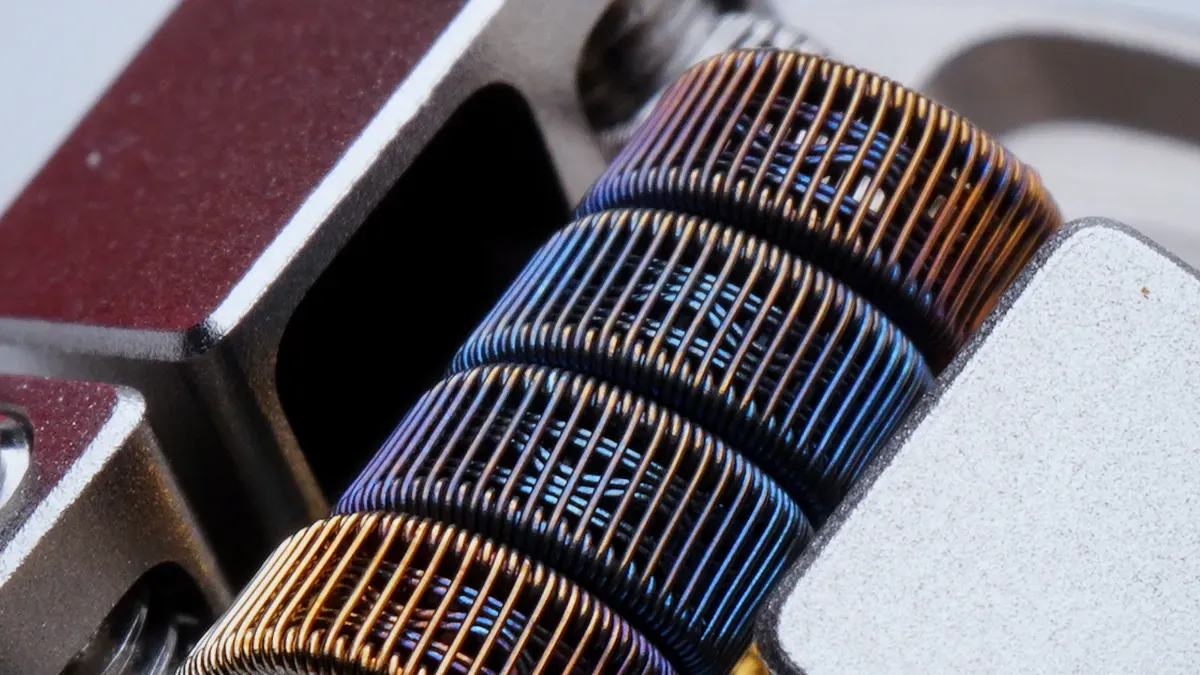
The coil is the main part of your device. It turns electrical energy into heat, and that heat controls everything you taste and feel. Different coil materials change how fast you get to your ideal temperature and how well your device keeps flavor. These differences directly affect vape hardware performance with every puff.
Coil Materials and Heat-Up Characteristics
Coil material shapes your whole session. Kanthal mesh coils reach the best temperature in roughly 0.01 seconds, giving you near-instant ramp-up. Their flat metal grid has thousands of tiny holes that touch more e-liquid at once. This design pulls out flavor compounds well for bolder taste and bigger vapor. Ceramic coils work in a different way. They use porous ceramic for slow, even heating. They take longer to warm up but give pure, clean taste because the chemically inert material does not react with e-liquid compounds. Ceramic also lasts longer and resists dry hits.
Quartz coils give you another option worth knowing. Quartz heats in 5–10 seconds and moves heat well and evenly. This keeps your oil's true terpene profile. In a blind taste test polling over 380 industry professionals at MJBizCon 2022, 83% chose quartz as producing the superior flavor profile compared to identical oil in ceramic hardware. ADACT Medical lab testing found ceramic emits 13,644 silicate particles versus quartz at 3,178—a 329% increase from ceramic. Ceramic's uneven heating creates hot spots that burn oil and make harmful aldehydes. Quartz keeps stable temperatures and reduces flavor loss.
| Coil Design Feature | Influence on Vapor Production | Influence on Flavor Retention |
|---|---|---|
| Improved Coil Designs | Enable better heating and more even vaporization | More even vaporization supports consistent flavor release |
| Advanced Coil and Wick Designs | Ensure even vapor production | Improve e-liquid absorption for richer taste |
| Mesh Coils | Larger surface area for consistent heating | Better flavor from consistent heating and larger contact area |
bestvapesupply offers both traditional wire and ceramic coil options in its cartridges and disposable pens, giving you flexibility to match your preferences.
Resistance, Voltage, and Wattage Dynamics
Coil resistance works with battery voltage to set your power output. Ohm's Law controls this relationship. Current equals voltage divided by resistance. Power output equals voltage squared divided by resistance. For a fixed voltage, lower resistance gives higher wattage. This makes more vapor and a warmer vape.
You can change voltage to control wattage and coil temperature. Lower voltage between 3.3V and 3.7V with high-resistance coils above 1.0 ohm gives cooler vapor. Higher voltage between 3.7V and 4.5V with low-resistance sub-ohm coils makes warmer vapor and stronger flavor. Setting voltage too high burns the coil and e-liquid, causing a burnt taste.
| Coil Resistance (Ohms) | Recommended Wattage Range | Effect on Coil Temperature |
|---|---|---|
| 0.15 – 0.3 | 60–120+ watts | Very high temperature; dense clouds |
| 0.4 – 0.6 | 25–50 watts | Moderate temperature; balanced |
| 0.8 – 1.2 | 15–25 watts | Lower temperature; flavor-focused |
| 1.5+ | 8–15 watts | Low temperature; mouth-to-lung |
These ranges show that matching voltage to coil resistance is key. The wrong combination either burns your e-liquid or makes weak vapor. Knowing these dynamics helps you affect vape hardware performance in a good way with every adjustment.
Heat Effects on Flavor and Vapor Consistency
Heat does more than make vapor. It changes the chemistry of every puff you take. Power curves control how heat is applied over time. A good curve keeps flavor and lowers harshness. A bad one burns your e-liquid and ruins the taste.
Flavor Preservation and Terpene Stability
Terpenes are volatile compounds. Their boiling points decide when they evaporate. When you apply heat, terpenes with lower boiling points evaporate first. Those with higher boiling points come next. This order matters for flavor.
Terpenes are volatile compounds, and their boiling points dictate the temperatures at which they evaporate. When heat is applied, terpenes with lower boiling points evaporate first, followed by those with higher boiling points.
Look at the numbers. Beta-Caryophyllene vaporizes at 119°C (246.2°F). Pinene at 155°C–156°C (311°F–312°F). Myrcene at 166°C–168°C (330.8°F–334.4°F). Limonene at 177°C (350.6°F). Linalool at 198°C (388.4°F). Go past these temperatures and terpenes break down. They turn into gas and vanish. Your flavor suffers.
| Terpene | Vaporization Temperature |
|---|---|
| Beta-Caryophyllene (BCP) | 119°C (246.2°F) |
| Pinene | 155°C – 156°C (311°F – 312°F) |
| Myrcene | 166°C – 168°C (330.8°F – 334.4°F) |
| Limonene | 177°C (350.6°F) |
| Linalool | 198°C (388.4°F) |
High heat causes specific problems. Beta-Caryophyllene breaks down into harsh compounds when held above 150°F (65°C) too long. Volatile monoterpenes like Limonene flash off almost instantly in hot distillate. A sensitive monoterpene such as Limonene can degrade by 15–25% within hours above 100°F (38°C). You lose citrus notes and the intended effect.
Hot weather makes this worse. Heat thins e-liquid and speeds degradation. Store cartridges at stable, cool temperatures. Avoid hot cars and radiators.
Vapor Density and Temperature Control
Temperature control directly governs vapor density. Higher temperatures vaporize e-liquid faster. You get more vapor per puff. Lower settings vaporize less material at a slower rate. You get thinner vapor.
| Device Type | Temperature Range | Effect on Vapor Density |
|---|---|---|
| Vape pens / dab pens | 300°F–450°F (149°C–232°C) | Lower end: less vapor; higher end: increased vapor production |
| Dry herb vaporizers | 350°F–430°F (177°C–221°C) | Lower end: smoother hits; higher end: dense vapor clouds |
| TC mode general range | 300°F–600°F (100°C–315°C) | User-set limit maintains consistent vapor output per puff |
Low power gives smoother, flavor-focused hits. High power makes denser vapor but risks terpene degradation. The choice affects vape hardware performance in clear ways.
Temperature control mode changes everything. It adjusts wattage dynamically to hold your preset temperature. The coil does not get progressively hotter during long draws. Vapor density stays consistent from puff to puff. In standard wattage mode, coil temperature rises the longer you inhale. Vapor density increases unpredictably mid-puff. TC mode eliminates this variability. It caps maximum temperature and prevents dry hits. Your vapor density remains stable.
Heating conditions influence aerosol chemistry. Elevated temperatures speed up e-liquid degradation. Flavor aldehydes react with PG and VG to form hemiacetals. Sucralose produces cytotoxic chloropropanols when aerosolized at high heat. Acetoin oxidizes to diacetyl in alkaline liquids. These chemical changes affect taste and safety.
You control these outcomes through temperature settings. Lower temperatures preserve delicate compounds. Higher temperatures boost vapor but risk degradation. Find the balance that matches your priorities.
Heating Tech Comparisons for Vape Hardware
Fixed Voltage vs. Variable Power Curves
Fixed-voltage devices send the same power through the whole draw. They cannot change as your oil level goes down. This design often heats too hard at the start, burns terpenes, and makes vaporization uneven. Variable power curves fix this problem. They map power output across the puff in half-second or one-second steps.
A typical curve starts at 90 W for the first 0.5 seconds to heat the coil fast. It drops to 75 W for the next 1.0 second, the ideal wattage for peak flavor. Then it steps down to 65 W for 1.0 second to keep the wick from drying out on a long draw. The rest runs at 60 W for a gentle finish.
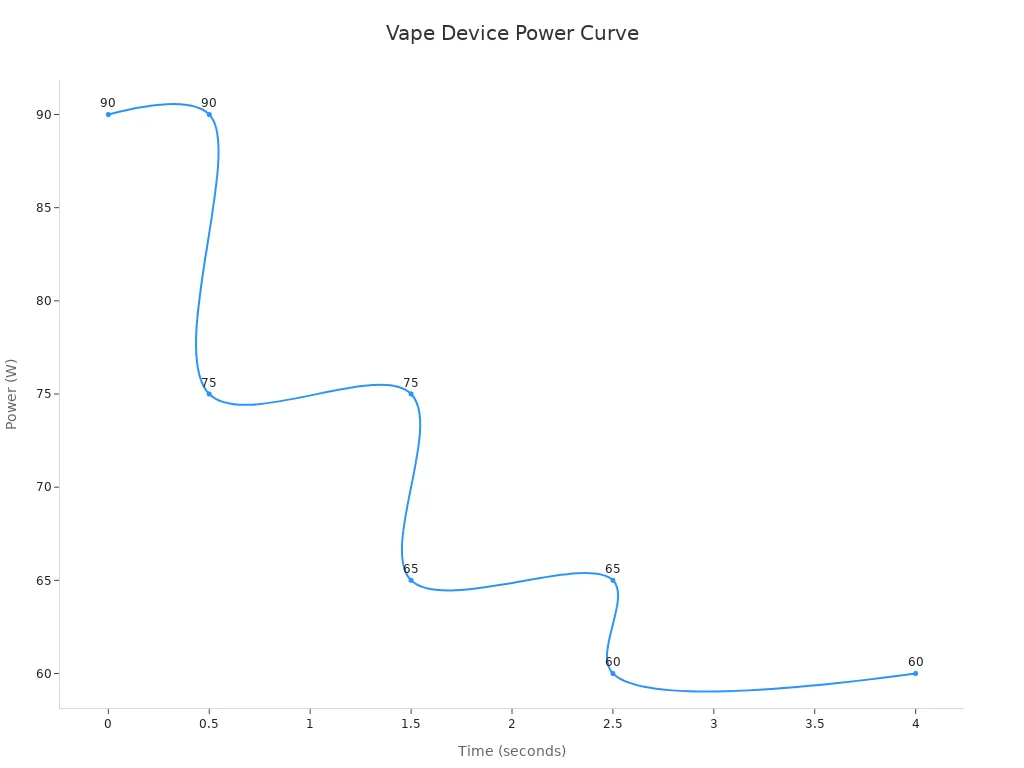
Pre-heat functions work the same way. They give 100 W for the first half-second to overcome ramp-up, then drop to 75 W for the rest of the draw. Temperature control mode uses maximum power up to a set limit, then slows down and pulses to hold that temperature. bestvapesupply's 510 thread batteries support multiple voltage levels, so you can adjust heating to your liking.
Wire, Mesh, and Ceramic Coil Performance
Mesh coils spread heat evenly across the mesh surface. This even spread vaporizes e-liquid steadily, giving you thicker vapor and better e-liquid use. Traditional wire coils show uneven, high-temperature hot spots. Mesh uses a cotton wick, and its larger surface area lets more e-liquid touch the heating element. Ramp-up is faster than ceramic, but mesh uses more e-liquid and battery power.
Ceramic coils use a porous ceramic wick instead of cotton. The material is chemically inert, so it does not react with e-liquid and keeps the original flavor profile. E-liquid soaks into tiny pores and heats evenly, producing steady vaporization with little temperature change. Ceramic handles higher temperatures, lasts longer, and lowers dry-hit risk. It also works well with thick e-liquids like CBD oils. The trade-offs are slower ramp-up, less vapor than mesh, and a more fragile build.
Higher power is not always better. It can break down terpenes and burn your wick. Match your coil type to the experience you want instead of chasing maximum wattage.
Practical Vaping Tips for Consistent Performance
Your daily habits and care choices change how your device works. Small changes in how you handle your gear can make coils last longer and keep flavor strong. The tips below help you get the most from your hardware.
Maintenance Practices to Preserve Coil Life
Begin by priming your coil the right way. Before the first use, put a few drops of e-liquid right on the cotton wick. Then fill the tank and let it sit for five to ten minutes. This step stops dry hits and early burning. You also want to choose better e-liquids. Those with fewer sweeteners and additives leave less gunk on the coil. Clean your tank and coil often. Take the parts apart and rinse them under warm water. Remove any residue or buildup. Old e-liquid mixing with new can ruin flavor and block airflow.
Change your wattage with care. Stay inside the recommended range for your exact coil. Using too much power burns the wick fast. Take soft, shorter hits instead of long, strong draws. This lowers heat stress on the coil. Avoid chain vaping. Let the device rest between puffs to stop overheating.
Clean your battery contacts once a month. Check them every few cartridge changes. If they look sticky or dirty, clean them right away. Use a dry cotton swab to wipe the connection points gently. A solid electrical connection keeps power delivery steady.
Store your device away from extreme temperatures. Heat and cold both cause problems. The table below shows what happens.
| Temperature Condition | Impact on Coil | Impact on Battery |
|---|---|---|
| Cold | Oil thickens. Coil works harder to vaporize it. You get weak, sharp hits and clogged airflow. | Battery loses power faster. It may flash warning lights and produce uneven heat. |
| Hot | Oil becomes too thin. It leaks into the coil and floods the wick. You may hear sputtering. | Battery drains faster. Heat accelerates degradation and can damage internal components. |
Change your coil every one to two weeks. That keeps performance crisp and prevents burnt taste.
Selecting bestvapesupply Heating Components for Reliability
Picking the right heating component makes your daily vaping easier. bestvapesupply offers high-quality cartridges and batteries. These keep heating stable from start to finish. Their 510 thread batteries support multiple voltage levels. You can adjust the heat to match your coil and oil.
Quality control matters for steady performance. Independent tests check resistance consistency across a batch. A good tolerance stays within plus or minus 0.05 ohms. Wide variation means uneven heating and poor vapor production. bestvapesupply components pass these checks. Their heating coils also go through thermal imaging during a puff cycle. This finds hot spots that cause burnt or dry hits.
For businesses, bestvapesupply provides fast shipment from overseas warehouses. They also offer OEM services. You can get custom components made for your brand and preferences. Reliable hardware makes your workflow simpler and keeps customers happy.
Heating systems shape every aspect of your vaping experience, from the first hit to the last. Coil material determines flavor and vapor character. Power curves let you customize each draw. Proper maintenance ensures consistent performance over time. You should experiment with different settings and components to find your sweet spot. Small adjustments can dramatically change how heating systems affect vape hardware. As heating technology evolves, features like smart power curves and temperature control will make it even easier to dial in your perfect vape. Whether you're a cloud chaser or a flavor connoisseur, the knowledge you gain here will help you make smarter hardware choices—and bestvapesupply is here to support you with industry-leading options.
FAQ
Which coil material gives the cleanest flavor?
Quartz and ceramic both keep flavor intact. Quartz heats evenly and avoids hot spots. It gives off fewer particles than ceramic. Quartz heats up in 5–10 seconds. Pick it for the truest terpene profile. Ceramic gives you a slower, clean heat.
Why does my vape taste burnt?
A burnt taste usually means too much power or a dry wick. You may go past your coil's wattage range. You may also vape too often without letting the wick soak again. Turn the voltage down. Give it time between draws. Prime new coils before you use them.
How does heat change flavor compounds?
Terpenes turn into vapor at different temperatures. Limonene vaporizes near 351°F. Beta-caryophyllene needs about 246°F. Going past those points breaks down the compounds. The flavor turns dull. Lower temperatures keep delicate notes safe.
What voltage should I set for my cartridge?
High resistance coils above 1.0 ohm work best at 3.3V–3.7V. You get cooler vapor. Sub-ohm coils need 3.7V–4.5V. You get warmer vapor and stronger flavor. Start low. Go up slowly until you find a smooth hit. This choice can affect vape hardware performance.
0users like this.
-
Posted on Tuesday, 25 August 2026
-
Posted on Monday, 07 September 2026
-
Posted on Tuesday, 15 September 2026
-
Posted on Tuesday, 15 September 2026
-
Posted on Sunday, 20 September 2026
-
Posted on Tuesday, 29 September 2026
0comments
- Empty Vape Hardware
- OEM vape hardware
- Dual Chamber Vape Hardware
- Thick Oil Vape Hardware
- dual chamber vape hardware
- Disposable Vapes
- Packman 4G
- ACE Ultra
- ACE Ultra Vape Pen
- Empty Disposable Hardware
- postless vape hardware
- OEM Manufacturing
- Rechargeable vape hardware
- Dual Chamber Hardware
- 10/10 Boys Switch
- Fryd dual chamber vape
- Fryd vape pen
- Fryd 2g
- Fryd disposable 2ml
- DRANKS DUAL Disposable Vape
- dual flavors
- Vape Battery
- HITZ ZEUS EDITION 2G
- HITZ Infinity Blue 2ML Pens
- HITZ Infinity
- HITZ ZEUS
- Dual Chamber Vape
- 2g Disposable
- Dual Tanks vape pen
- Disposable Vape Pens
- Wholemelt Phase Five Switch Vapes
- Wholemelt Switch Vapes 2G
- Wholemelt Vapes 2G
- DUAL Disposable Vape
- 2ML Dual Tanks
- 2G Disposable Vape
- MUHA MEDS Gen
- Splitz Vape Pen
- Splitz Vapes 2G
- Muha meds 2G
- Splitz 2ml
- TURNONE 2ML Empty Vape Hardware
- TURNONE 2ML
- customization
- 2ML Empty Vape
- ACE 2ml Vapes
- Packman 2ml vapes
- Whole Melt Candy Shop Switch 2G
- Whole Melt Candy Shop Switch
- dual-chamber
- OG Cake
- Cake 2ml vapes
- OG Cake Vape Pen
- Cake 2G Vapes
- MUHA MEDS Gen 3
- Muha meds 2ml
- Muha meds Switch
- Muha Meds 2.5G
- Sherbinskis Quattro 2G
- activation failure
- FAVORITES Disposable 3G
- Disposable 3G
- FAVORITES Disposable
- FRYD SWITCH DISPOSABLE 2G
- FRYD Switch 2G
- disposable vape
- FRYD 2g
- Dual Chamber Pens
- HITZ ZEUS Edition 2G
- MUHA MEDS Melted Diamonds vape
- HITZ ZEUS 2G
- MUHA MEDS Melted Diamonds 3.5G
- Push V2 Summer Vape Pen
- Push V2 Summer Vape Switch
- Push 2G Vape Switch
- Push 2G Switch
- Boutiq Switch ORB V5 Triple Tank
- Boutiq Switch ORB V5
- Boutiq Switch
- Triple Tank Vape
- Packman Partyboyz Disposable Vape
- Packman Partyboyz 3G
- Packman vape pen
- Packman 2g vapes
- Raw Garden Adjustable Voltage
- Raw Garden 2G
- Raw garden Vapes
- Raw garden vape pen
- MUHA MEDS Empty Vape Pen
- SHERBINSKIS QUATTRO 2G
- MUHA MEDS 2g Vape Pen
- dual chamber Vape Pen
- Muha Meds empty vape
- 3.5ML Muha Meds
- Muha Meds 2ml
- Crybaby Trios 3G
- Crybaby Trios 3G Empty Disposable Vape
- disposable vape hardware
- Muha Meds Gen 3 empty hardware
- HitZ Infinity 2G empty hardware
- Slugger Hit 3G Triple-Chamber Vape
- Multi-Flavor Hardware
- disposable empty hardware
- Airflow Blockage
- Thick Oil Empty Vape Hardware
- thick oil vape cartridge
- OEM empty vape hardware
- DONUTS Switch GEN 2 E
- 2ML Dual Chamber Vape
- DONUTS Switch Pen 2ML
- Boutiq Switch V5
- Boutiq Dual Chamber
- Empty Vape Hardware Quality Control
- LUIGI V9 2G Empty Vape Hardware
- Donuts Gen 2 Dual Chamber
- Sprinklez Disposable Vape
- Sprinklez Disposable 2G
- Muha meds glass jars
- ACE Glass jars
- custom packaging
- UNIPUFF SWITCH DISPOSABLE 2G
- Muha Meds GTA edition
- Alien Labs Dual Empty Disposable 2G
- Alien Labs Dual
- vape pen overheating
- vape hardware troubleshooting
- vape battery overheating
- Raw Garden Vape Pen
- Ceramic Coil
- rechargeable disposable
- 2ML Empty Vape Hardware
- OG Cake Legendary Edition
- CRYBABY TRIOS 3 IN 1
- Multi-Chamber Vape
- manufacturing process
- BIG CHIEF DUO V3 Empty Vape Hardware
- Single Chamber Vape Hardware
- Sluggers Hit dual chamber
- OEM vape manufacturer
- 510 Thread Vape Cartridge
- Dual chamber
- LED screen devices
- All-In-One Vape Hardware
- Dual Vape Hardware
- 510 cartridge hardware
- ceramic vape cartridge
- OEM cartridge supplier
- ACE Ultra 2ml Dual Chamber
- Donuts Switch V4 Dual Chamber
- Single-Chamber Disposables
- Ceramic Coil Guide
- Thick Oil Hardware
- CALI CLEAR 2G
- Oil flow problems
- Ace Ultra Switch
- Ace Ultra Premium Empty Vape Hardware
- LED screen vape hardware
- Smart vape hardware
- Voltage Control
- Buzz Bar 3G Switch
- 10/10 Boys Single Flavor
- multi chamber vape hardware
- Sluggers Dual Chamber
- SMOOTHIE BAR BLEND 3.0 Switch
- Switch Empty Vape Hardware
- Multi-Chamber Empty Vape Hardware
- vape hardware airflow
- multi-chamber hardware leakage
- BESOS 3 Flavors Switch
- BESOS 3 Flavors Switch Empty Vape Hardware
- Slugger Hit 3 tanks SWITCH 3G
- 10/10 Boys Switch clogging
- SHERBINSKIS QUATTRO 2G dual chamber vape hardware
- Packman x Jeeter DUAL CHAMBER Vape Hardware
- 2G disposable vape
- Empty Triple-Chamber Vape Hardware
- OEM triple chamber vape hardware
- postless dual-chamber vape hardware
- ceramic vape hardware
- triple chamber vape hardware
- 1mL + 1mL dual-chamber vape
- dual-chamber empty vape hardware
- Khalifa Kush Switch
- HOLLOWTIPS 2G vape hardware
- HOLLOWTIPS 2G empty vape
- Hollow Tips 2G empty vape
- Hollowtips V1 empty vape hardware

Your cart is currently empty.