
-
 Shopping Cart (0)
Cart Total:
Your cart is currently empty..
Vape Hardware Engineering

How to Test Empty Vape Hardware Before Mass Production: QC Checklist
- Tuesday, 25 August 2026
- 0
- 238
- 0
For vape brands, distributors and OEM buyers, hardware quality directly affects product reliability, customer satisfaction and long-term brand reputation.
Before moving from samples to bulk production, empty vape hardware should go through structured testing including material inspection, heating performance evaluation, leakage testing, battery compatibility checks and production consistency verification.
This guide explains the key QC steps buyers should review before approving large-scale manufacturing.
Key Takeaways
- Test materials, heating elements, and real-world conditions to find flaws before they become big problems.
- First, test a small batch of 5 units to see if the idea works. Then, run a pilot batch of 50 units before you start making the full production run.
- Check that the supplier has certifications like FCC, RoHS, and UN38.3 to make sure they follow the rules.
- Use a scorecard to grade suppliers on how fast they deliver, how well they talk to you, and how much they can change things to fit your needs.
- Invest in testing to protect your brand and steer clear of expensive product flops.
How to Test Empty Vape Hardware: Core Areas
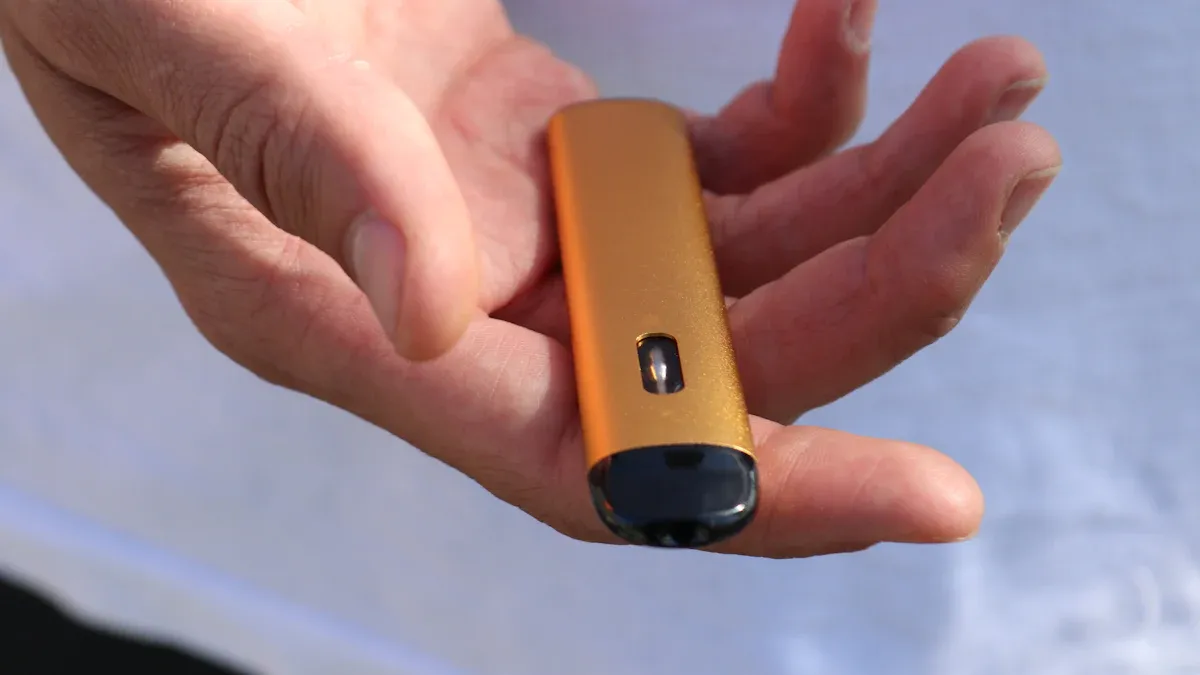
Before you test empty vape hardware, you must understand the three critical areas that determine product success or failure. Each area requires specific attention and different testing methods.
Material Safety and Chemical Compatibility
Your cartridge material directly affects what your customers inhale. Glass and plastic behave very differently when exposed to heat and oil.
|
||||||||||
"Nobody would heat a plastic container to 400 degrees in their kitchen and then eat out of it. But that's essentially what a plastic vape cart is doing, and you're not eating it, you're inhaling it. That's a more direct route into your body than digestion." — Nick, chemical engineer
You should request material data sheets from suppliers. Reputable suppliers like bestvapesupply offer both glass and plastic options and provide documentation for each. Ask for chemical compatibility reports that show how each material interacts with your specific oil formulation.
Heating Element and Airflow Performance
Your heating element determines vapor quality and consistency. You must test for consistent vapor production, resistance drift, and the prevention of burnt tastes. Resistance drift occurs when the coil's resistance changes over time, leading to uneven heating and poor flavor.
Key inspection points include:
- Resistance consistency
- Heating response time
- Ceramic core integrity
- Airflow balance
- Dry-hit prevention
- Oil compatibility
Test with your actual oil formulation, not a substitute. Different oils have different viscosities and densities. A cartridge that performs well with thin oil may fail with thick oil. The testing process involves heating samples at 200°C for 15 minutes to simulate vaping conditions, then analyzing the vapor composition. This method verifies that your oil produces consistent vapor profiles under standardized heating.
Leak, Clog, and Altitude Testing
Real-world conditions can destroy poorly designed cartridges. You must simulate temperature changes, low pressure from air travel, and repeated handling. Leak testing under normal handling, temperature changes, and over time reveals structural weaknesses. Clogging checks across repeated draws ensure your customers can use the product consistently.
Your testing checklist should include sample testing with the final formulation, leak checks, clogging checks, battery performance, mouthpiece fit, packaging quality, and consistency across batches. The strongest products start with testing: final oil, real handling conditions, leakage checks, clogging checks, battery compatibility, filling behavior, MOQ, lead times, and repeat-order consistency.
When you test empty vape hardware thoroughly, you catch defects before your customers do. This investment protects your brand and your bottom line.
| Testing Item | Purpose |
|---|---|
| Appearance Inspection | Check scratches, assembly defects |
| Battery Test | Verify charging and output stability |
| Coil Resistance Test | Ensure heating consistency |
| Leakage Test | Check chamber and seal performance |
| Airflow Test | Confirm draw consistency |
| Aging Test | Evaluate long-term performance |
| Packaging Inspection | Prevent shipping damage |
A Sample-First Testing Framework

Testing empty vape hardware needs a step-by-step plan. You cannot go from one prototype straight to a big production run. Instead, you grow your sample size in steps. Each step finds different types of problems. Each step costs less than the next one. This plan saves you money while making you more sure about your product.
Stage 1: The 5-Pack Feasibility Check
Your first step uses five units. This small sample tells you if your design works at all. You test basic function before you spend money on larger amounts.
Start with draw resistance consistency. All five units should feel the same when you pull air through them. If one unit feels tight and another feels loose, your manufacturing process has a problem. Next, test vapor quality at each power setting. Run your battery at low, medium, and high power. Make sure vapor production stays steady across all settings.
Do a leak test. Fill and cap each unit, then store it upside down at room temperature for 24 hours. After that, put the units in higher heat to mimic summer shipping conditions. This test shows seal weaknesses early.
Check the mouthpiece thread fit and how it feels when you tighten it. The mouthpiece should screw on smoothly without crossing the threads. Finally, run a full-cycle test. Use each unit until it is empty. Watch for any flavor change as the oil level goes down. This tells you how your hardware works from first puff to last.
The 5-pack stage answers one question: does this design work? If any unit fails, you fix the design before spending more money.
Stage 2: The 50-Pack Pilot Run
Once your 5-pack passes, you move to a 50-pack pilot run. This stage tests batch consistency. You check that unit 47 works the same as unit 3.
Fill your test batch of 50 to 100 units with the actual production oil. Do not use a substitute. Your oil's thickness affects wicking, heating, and leak resistance. Put the filled units through a 14-to-30-day static storage test. This checks for seal breakdown and wicking problems over time. Do real-world consumer testing under different air temperatures. Check hardware performance from first fill all the way through to empty.
Your main pass/fail rule is the 100-puff stress test. Run each unit through 100 puffs using your final oil mix. Watch for resistance drift, vapor consistency, and any burnt taste. A unit that fails this test will fail in your customer's hands.
The pilot run needs controlled configuration records. Write down the approved drawing and product version. Record the notice period and authorized contacts. State the buyer's right to stop production or shipping. Say who pays for retesting, rework, or replacement. Link each approved exception to your purchase order and lot record.
Put the specification sheet, packaging proof, and related drawings in the same file as the sample record. Mark document status as received, under review, or replaced. Keep the approved sample identity next to your dimensional inspection record. Define your change-control decision rule. Say which changes need notice and which need a new buyer review.
Clear release rules protect you. You do not move to mass production until every unit in the pilot run passes. This discipline stops costly surprises. When you test empty vape hardware at this level, you catch batch-level defects before they reach your customers. The 50-pack stage bridges the gap between a working design and a product you can make in large numbers.
Documentation, Compliance, and Supplier Evaluation
Certifications are not optional extras. They are your passport to market access. Without them, your products sit in customs or get rejected outright. You need three key certifications for most markets: FCC, RoHS, and UN38.3.
FCC certification proves your device meets US electronic rules. It covers electromagnetic interference and ensures your hardware does not disrupt other electronics. RoHS compliance confirms your product contains no hazardous substances like lead or mercury. UN38.3 applies specifically to lithium batteries. It verifies they survive shipping conditions without catching fire or exploding.
Proper documentation is the backbone of smooth international shipping. If your paperwork isn't in order, your products can get stuck in customs for weeks or even be rejected entirely. Every document, from the commercial invoice to the certificate of origin, must be accurate and complete.
You must also verify these certifications are genuine. Some suppliers fake documents. Request business licenses and tax IDs first. Then ask for batch reports and audit records before placing bulk orders. Check packaging and authenticity codes to confirm product legitimacy. A reputable supplier will provide these without hesitation.
Requesting and Verifying Key Certifications
Start by requesting specific documents from your supplier. Ask for ISO 9001 for quality management, CE marking for European markets, and TPD documentation if you sell in the EU. For US markets, request PMTA awareness and FDA compliance records.
ISO 13485 certification shows that your factory has: a complete quality management system, traceable documentation and batch control, verified risk assessments, and qualified supplier management.
Your shipping paperwork matters just as much. Include technical descriptions that distinguish empty vape hardware from regulated nicotine devices. Label products clearly as hemp-derived and nicotine-free when applicable. Provide test reports for batteries, heating elements, and plastics. Use accurate HS codes to avoid customs delays. Keep digital and hard copies of everything.
A Scorecard for Assessing Supplier Capability
You need a systematic way to evaluate suppliers. Create a scorecard that covers lead times, communication, and customization willingness.
| Metric | Description |
|---|---|
| On-time delivery | Percentage of orders delivered by the agreed date |
| Response time | Speed of supplier's reply to inquiries or issues |
| Customization | Willingness to adapt products to your specifications |
Communication matters more than most buyers realize. Can you reach a real person by phone during US business hours? This criterion directly addresses accessibility and responsiveness. A supplier who disappears after payment will cause endless problems.
Bestvapesupply excels in these areas. They offer OEM services for custom logo vape pens and maintain overseas warehouses for fast shipment. Their team responds quickly and provides complete documentation for every order. When you test empty vape hardware from them, you receive material data sheets and certification copies upfront.
Lead time reliability also deserves attention. Does the supplier consistently meet agreed production and shipping deadlines? Support after shipment matters too. Evaluate how quickly they respond to issues that arise after dispatch. A supplier who stands behind their products will resolve problems fast.
Your scorecard should also assess process proof. Require suppliers to demonstrate their quality systems work, not just claim ISO 9001 compliance. Verify traceability through batch numbering. Remember that you bear ultimate responsibility for product failures, regardless of supplier fault. Choose partners who prioritize quality and transparency.
You now have a complete testing strategy. Know what to test: materials, heating elements, and real-world conditions. Follow the phased framework: five units first, then fifty, then scale. Partner with a compliant supplier who provides certifications and transparent documentation.
Testing costs a fraction of a failed launch. One leaky batch destroys your reputation and your retail accounts. The investment protects both.
Start today. Request material data sheets from your supplier. Begin your 5-pack feasibility check this week. Seek partners who prioritize quality and transparency, just like bestvapesupply. Your customers deserve hardware that works. Your brand depends on it.
FAQ
How long does the full testing process take?
The timeline depends on how complex your product is. The 5-pack feasibility check takes about one week. The 50-pack pilot run needs 14 to 30 days for static storage testing. Plan for at least six weeks total before you commit to mass production.
Can I skip the 5-pack stage to save time?
You can, but you shouldn't. The 5-pack catches basic design flaws before you spend money on larger batches. A single failed unit in the 50-pack stage costs far more than the time you save. Start small. Fix problems early.
What happens if my pilot run fails?
You stop and fix the issue before scaling up. Review your configuration records and identify which component caused the failure. Work with your supplier to correct the problem. Then run another pilot batch. Never move forward with known defects.
How do I verify a supplier's certifications are genuine?
Request business licenses and tax IDs first. Then ask for batch reports and audit records. Check packaging and authenticity codes on physical samples. A reputable supplier like bestvapesupply provides these documents without hesitation. If they resist, find another partner.
0users like this.
-
Posted on Wednesday, 26 August 2026
-
Posted on Monday, 07 September 2026
-
Posted on Saturday, 05 September 2026
-
Posted on Tuesday, 15 September 2026
-
Posted on Tuesday, 15 September 2026
-
Posted on Wednesday, 16 September 2026
-
Posted on Sunday, 20 September 2026
-
Posted on Tuesday, 29 September 2026
0comments
- Empty Vape Hardware
- OEM vape hardware
- Dual Chamber Vape Hardware
- Thick Oil Vape Hardware
- dual chamber vape hardware
- Disposable Vapes
- Packman 4G
- ACE Ultra
- ACE Ultra Vape Pen
- Empty Disposable Hardware
- postless vape hardware
- OEM Manufacturing
- Rechargeable vape hardware
- Dual Chamber Hardware
- 10/10 Boys Switch
- Fryd dual chamber vape
- Fryd vape pen
- Fryd 2g
- Fryd disposable 2ml
- DRANKS DUAL Disposable Vape
- dual flavors
- Vape Battery
- HITZ ZEUS EDITION 2G
- HITZ Infinity Blue 2ML Pens
- HITZ Infinity
- HITZ ZEUS
- Dual Chamber Vape
- 2g Disposable
- Dual Tanks vape pen
- Disposable Vape Pens
- Wholemelt Phase Five Switch Vapes
- Wholemelt Switch Vapes 2G
- Wholemelt Vapes 2G
- DUAL Disposable Vape
- 2ML Dual Tanks
- 2G Disposable Vape
- MUHA MEDS Gen
- Splitz Vape Pen
- Splitz Vapes 2G
- Muha meds 2G
- Splitz 2ml
- TURNONE 2ML Empty Vape Hardware
- TURNONE 2ML
- customization
- 2ML Empty Vape
- ACE 2ml Vapes
- Packman 2ml vapes
- Whole Melt Candy Shop Switch 2G
- Whole Melt Candy Shop Switch
- dual-chamber
- OG Cake
- Cake 2ml vapes
- OG Cake Vape Pen
- Cake 2G Vapes
- MUHA MEDS Gen 3
- Muha meds 2ml
- Muha meds Switch
- Muha Meds 2.5G
- Sherbinskis Quattro 2G
- activation failure
- FAVORITES Disposable 3G
- Disposable 3G
- FAVORITES Disposable
- FRYD SWITCH DISPOSABLE 2G
- FRYD Switch 2G
- disposable vape
- FRYD 2g
- Dual Chamber Pens
- HITZ ZEUS Edition 2G
- MUHA MEDS Melted Diamonds vape
- HITZ ZEUS 2G
- MUHA MEDS Melted Diamonds 3.5G
- Push V2 Summer Vape Pen
- Push V2 Summer Vape Switch
- Push 2G Vape Switch
- Push 2G Switch
- Boutiq Switch ORB V5 Triple Tank
- Boutiq Switch ORB V5
- Boutiq Switch
- Triple Tank Vape
- Packman Partyboyz Disposable Vape
- Packman Partyboyz 3G
- Packman vape pen
- Packman 2g vapes
- Raw Garden Adjustable Voltage
- Raw Garden 2G
- Raw garden Vapes
- Raw garden vape pen
- MUHA MEDS Empty Vape Pen
- SHERBINSKIS QUATTRO 2G
- MUHA MEDS 2g Vape Pen
- dual chamber Vape Pen
- Muha Meds empty vape
- 3.5ML Muha Meds
- Muha Meds 2ml
- Crybaby Trios 3G
- Crybaby Trios 3G Empty Disposable Vape
- disposable vape hardware
- Muha Meds Gen 3 empty hardware
- HitZ Infinity 2G empty hardware
- Slugger Hit 3G Triple-Chamber Vape
- Multi-Flavor Hardware
- disposable empty hardware
- Airflow Blockage
- Thick Oil Empty Vape Hardware
- thick oil vape cartridge
- OEM empty vape hardware
- DONUTS Switch GEN 2 E
- 2ML Dual Chamber Vape
- DONUTS Switch Pen 2ML
- Boutiq Switch V5
- Boutiq Dual Chamber
- Empty Vape Hardware Quality Control
- LUIGI V9 2G Empty Vape Hardware
- Donuts Gen 2 Dual Chamber
- Sprinklez Disposable Vape
- Sprinklez Disposable 2G
- Muha meds glass jars
- ACE Glass jars
- custom packaging
- UNIPUFF SWITCH DISPOSABLE 2G
- Muha Meds GTA edition
- Alien Labs Dual Empty Disposable 2G
- Alien Labs Dual
- vape pen overheating
- vape hardware troubleshooting
- vape battery overheating
- Raw Garden Vape Pen
- Ceramic Coil
- rechargeable disposable
- 2ML Empty Vape Hardware
- OG Cake Legendary Edition
- CRYBABY TRIOS 3 IN 1
- Multi-Chamber Vape
- manufacturing process
- BIG CHIEF DUO V3 Empty Vape Hardware
- Single Chamber Vape Hardware
- Sluggers Hit dual chamber
- OEM vape manufacturer
- 510 Thread Vape Cartridge
- Dual chamber
- LED screen devices
- All-In-One Vape Hardware
- Dual Vape Hardware
- 510 cartridge hardware
- ceramic vape cartridge
- OEM cartridge supplier
- ACE Ultra 2ml Dual Chamber
- Donuts Switch V4 Dual Chamber
- Single-Chamber Disposables
- Ceramic Coil Guide
- Thick Oil Hardware
- CALI CLEAR 2G
- Oil flow problems
- Ace Ultra Switch
- Ace Ultra Premium Empty Vape Hardware
- LED screen vape hardware
- Smart vape hardware
- Voltage Control
- Buzz Bar 3G Switch
- 10/10 Boys Single Flavor
- multi chamber vape hardware
- Sluggers Dual Chamber
- SMOOTHIE BAR BLEND 3.0 Switch
- Switch Empty Vape Hardware
- Multi-Chamber Empty Vape Hardware
- vape hardware airflow
- multi-chamber hardware leakage
- BESOS 3 Flavors Switch
- BESOS 3 Flavors Switch Empty Vape Hardware
- Slugger Hit 3 tanks SWITCH 3G
- 10/10 Boys Switch clogging
- SHERBINSKIS QUATTRO 2G dual chamber vape hardware
- Packman x Jeeter DUAL CHAMBER Vape Hardware
- 2G disposable vape
- Empty Triple-Chamber Vape Hardware
- OEM triple chamber vape hardware
- postless dual-chamber vape hardware
- ceramic vape hardware
- triple chamber vape hardware
- 1mL + 1mL dual-chamber vape
- dual-chamber empty vape hardware
- Khalifa Kush Switch
- HOLLOWTIPS 2G vape hardware
- HOLLOWTIPS 2G empty vape
- Hollow Tips 2G empty vape
- Hollowtips V1 empty vape hardware

Your cart is currently empty.