
-
 Shopping Cart (0)
Cart Total:
Your cart is currently empty..
Vape Hardware Engineering
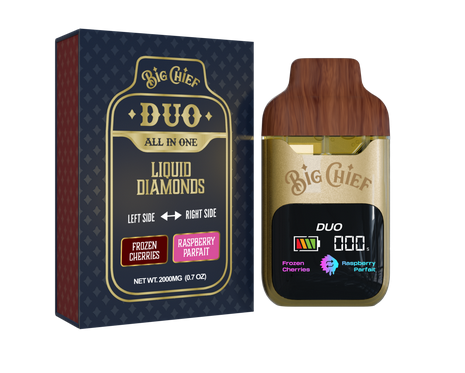
Voltage Control in Empty Vape Hardware: Coil Design, Oil Compatibility & OEM Considerations
- Thursday, 24 September 2026
- 0
- 188
- 0
Voltage control is an important factor in empty vape hardware design because it influences how electrical power is delivered to the heating system.
The relationship between voltage, coil resistance, airflow and oil viscosity determines heating behavior, vapor consistency and hardware compatibility.
For OEM brands and wholesale buyers, understanding voltage design helps select suitable hardware platforms for different oil formulations and product requirements.
Key Takeaways
- Voltage affects heating behavior by controlling electrical power delivered to the coil.
- Coil resistance, heating material and airflow must be matched with voltage output.
- Different oil viscosities may require different heating approaches.
- Ceramic heating systems are commonly used for stable heat distribution.
- OEM buyers should evaluate voltage range, battery output and oil compatibility before production.
How Voltage Control Affects Hardware Design
When you pick a voltage setting, you directly shape many hardware design choices. The coil resistance, the wick material, and the airflow path all react to voltage. Knowing How Voltage Control Affects these parts helps you choose the right hardware for your oil.
Coil Resistance and Wire Gauge
The coil decides how much heat it makes from a given voltage. The link follows the formula power equals voltage squared divided by resistance (P = V²/R). This means a lower voltage needs a lower resistance coil to make enough heat for good vapor.
Wire gauge controls resistance. Coil resistance determines how much power the heating element receives at a specific voltage.
Lower resistance generally allows higher power output, while higher resistance usually requires different voltage settings. A higher gauge number means thinner wire. For example, 28 gauge is thinner than 26 gauge but thicker than 30 gauge. Thinner wire makes higher resistance. Thicker wire makes lower resistance.
How Coil Resistance Affects Voltage Selection
For empty vape hardware, resistance selection should match:
- Battery capacity
- Coil material
- Oil viscosity
- Airflow design
- Target vapor performance
Thicker wire takes longer to heat up. This period is called ramp-up time. A lower gauge wire with lower resistance makes more heat but needs more time to reach the target temperature. Exotic coils with multiple wire strands tend to have longer ramp-up times. Hardware designers balance this trade-off carefully based on the voltage range the device supports.
For low voltage settings, designers often use thicker wire to keep resistance low. This makes sure enough heat reaches the coil. For higher voltage settings, thinner wire works well because the voltage itself gives plenty of power.
Bestvapesupply's empty vape cartridges use coils matched to specific voltage ranges. Their 510 thread batteries offer adjustable voltage. How Voltage Control Affects coil resistance helps you choose the right cartridge and battery combination for your needs.
How Voltage and Airflow Work Together in Vape Hardware
Wick material matters more at higher voltages. Ceramic wicks work very well under high heat. Ceramic has a very high melting point and unmatched heat resistance. Even if the wick runs dry, it does not burn or break down. Unlike cotton, ceramic has no fibers that can burn. This removes the harsh smoke and bad taste of a dry hit. Ceramic spreads heat evenly across its surface, stopping localized hot spots. Medical-grade ceramic does not release harmful byproducts at vaping temperatures, ensuring pure vapor.
Higher voltage devices often need ceramic wicks for these reasons. Cotton wicks can scorch at high temperatures. Designers choose wick material based on the voltage range.
Changing voltage without considering airflow can affect vapor temperature, draw resistance and overall performance.
Airflow geometry also depends on voltage. Air acts as a cooling variable inside the cartridge. When airflow is low, heat can build up around the ceramic core. If you set voltage too high, vapor temperature rises and flavor gets worse. Too much airflow cools the system too fast, producing thin vapor. Airflow and voltage must work together.
Several design variables affect vapor cooling and draw resistance. Air intake position, number, and diameter determine how much air enters. Smaller intakes raise draw resistance. Center airway diameter and length also matter. Wider airways lower resistance and allow more cooling. The narrowest point in the airflow path acts as the bottleneck controlling overall draw resistance. The mouthpiece cavity design affects final draw feel and gives space for vapor cooling before inhalation. Sealing structure stops pressure imbalance that can cause flooding or leaking.
| Airflow Setting | Draw Resistance | Vapor Temperature | Vapor Concentration |
|---|---|---|---|
| Tighter airflow | Higher resistance | Warmer vapor | Denser, more concentrated |
| Wider airflow | Lower resistance | Cooler vapor | Thinner, larger clouds |
The chain of variables starts with oil viscosity. Intake geometry matches the oil's flow characteristics. Ceramic core pore structure controls wicking rate. Coil resistance tunes to the power profile. Then voltage and calibrated airflow channels work together for target vapor density. Changing one variable without adjusting the others usually brings a new performance problem.
Slimmer enclosures limit battery size. A 350 mAh battery fits in a very small key-fob sized device but gives only 100-150 draws. An 800 mAh battery offers 300+ draws but needs a bulkier form factor. Match capacity to your usage patterns.
Bestvapesupply offers OEM services and customizable empty vape cartridges and glass tubes for different oil viscosities. Their products integrate these design considerations, making How Voltage Control Affects hardware design clear.
Voltage Control Design Factors
| Component | Effect |
|---|---|
| Battery | Determines available output |
| PCB | Controls voltage regulation |
| Coil Resistance | Determines power response |
| Heating Material | Influences heat distribution |
| Airflow | Controls cooling and vapor density |
| Chamber Design | Affects oil delivery |
Oil Compatibility with bestvapesupply Hardware
Viscosity and Flow Dynamics
How thick the oil is decides which voltage setting works best. Thin oils flow quickly and need higher voltage to turn into vapor without flooding. Thick oils move slowly and need lower voltage to prevent dry hits. This is one clear way How Voltage Control Affects oil compatibility.
Viscosity directly controls oil flow and how fast the wick pulls it in. You must fine-tune voltage ranges, preheat cycles, and draw-activation sensitivity to match your oil. The table below shows how intake hole size pairs with oil thickness.
| Aperture Size | Viscosity Level | Best Suited Oil Types | Notes |
|---|---|---|---|
| 2.0 mm | Thickest | Rosin, Distillate | Large intake needed; preheat essential for rosin |
| 1.6–1.8 mm | Medium | Live Resin, Crude Oil, Shatter | Smooth flow without leakage |
| 1.2–1.4 mm | Thin-Medium | Sauce | Prevents flooding for runny, terpene-rich components |
| 1.0–1.2 mm | Thinnest | CBD Oil, Thin Oils | Controlled flow prevents leaks in low-viscosity formulations |
Adjustable voltage batteries let you manually control heat intensity for different oil thicknesses. Fixed-voltage units often overheat or underperform across batches.
A fixed-voltage battery uses a single setting for every cartridge, which will be unsuitable for most; adjustable voltage can be tailored to each cartridge's specific requirements.
Best Vape Supply provides OEM empty vape hardware solutions including adjustable voltage devices, ceramic heating platforms, dual chamber systems and customized disposable hardware.
Hardware selection can be evaluated based on oil viscosity, heating requirements, battery configuration and production goals.
Cannabinoid and Terpene Limits
Different oil formulations respond differently to heat. Hardware selection should consider oil viscosity, terpene profile and heating system design.
PG/VG ratios and other additives change how oil responds to heat. Thinner additives vaporize faster and may need lower voltage to avoid harsh hits. Terpene-rich extracts demand gentler heating.
| Oil Type | General Hardware Consideration |
|---|---|
| Thin oils | Controlled heating to avoid flooding |
| Thick oils | Stronger wicking support and suitable heating |
| Terpene-rich oils | Stable heating preferred |
| High viscosity oils | Preheat may help oil flow |
How Voltage Control Affects Hardware Performance
Voltage and coil surface area work together to decide how much vapor you get. A bigger coil surface area touches more oil and makes more vapor at a set voltage. When you turn up the voltage, the coil heats faster and gets hotter. This mix of heat and surface area controls how much vapor you get per puff. How Voltage Control Affects vapor density becomes clear when you change settings on the same cartridge. Low voltage with a big coil gives weak vapor. High voltage with a small coil overheats the oil.
Vapor, Flavor, and Efficiency
Stopping overheating keeps flavor clear and protects terpene profiles. Terpenes break down at fairly low temperatures, so too much heat ruins the compounds that give each strain its special taste and smell. You lose the subtle notes first, then the main flavor profile fades. Keeping voltage in the best range protects these delicate compounds.
The best voltage range for maximum extraction and battery life depends on your oil type. Distillate works well at 3.0–3.6V. Live resin performs best at 2.6–3.2V. Rosin carts need 2.8–3.4V. CBD oil often requires 3.2–3.8V. These ranges balance full extraction against energy waste.
Battery life drops sharply at higher voltages. Raising the voltage from 3.3 V to 4.0 V on a similar cartridge can cut battery life by about one-third to one-half. Lower voltage settings are the most efficient, while higher settings drain the battery fastest.
Raising the voltage from 3.3 V to 4.0 V on a similar cartridge can cut battery life by about one-third to one-half. Lower voltage settings are the most efficient, while higher settings drain the battery fastest.
Vape pulses—short bursts at changing voltages—can boost flavor and save coils. Instead of holding the button down, you tap it in short intervals. This method stops the coil from reaching steady high temperatures. The oil gets heated in controlled steps, which preserves terpenes and extends coil life.
Safety and Battery Life
Staying below breakdown thresholds prevents combustion and toxic byproducts. The wick material decides your safety margin. Cotton starts to break down at 420°F and releases formaldehyde and acetaldehyde when burnt. Ceramic handles temperatures above 1000°F without breaking down and makes no harmful byproducts during dry hits.
| Wick Type | Temperature Threshold | Harmful Byproducts |
|---|---|---|
| Cotton | 420°F (degradation) | Formaldehyde and acetaldehyde when burnt |
| Ceramic | >1000°F (no breakdown) | No harmful byproducts produced during dry hits |
Research on toxic compound formation shows that aldehyde levels per puff depend on power settings. However, levels per gram of liquid consumed stay independent of power settings under realistic conditions. Most formaldehyde and acetaldehyde exposure comes from breakdown of e-liquid components rather than being present in the liquid itself. Nicotine-normalized formaldehyde and total carbonyl yields are lower by 6-fold and 50-fold respectively compared to combustible cigarettes.
Fixed voltage batteries are simple and cost-effective. They may not be ideal for oils that need fine-tuned heat control. Adjustable voltage devices support various oil viscosities and let you dial in the perfect setting. How Voltage Control Affects safety and performance makes adjustable devices the better choice for serious users.
Voltage Control Considerations for OEM Vape Hardware
When developing custom empty vape hardware, manufacturers consider:
• Target oil viscosity
• Coil resistance
• Battery capacity
• Voltage range
• Preheat function
• Airflow design
• Charging system
• Product positioning
How Manufacturers Test Voltage Performance
| Test | Purpose |
|---|---|
| Voltage output test | Verify electrical control |
| Resistance test | Check coil consistency |
| Heating test | Confirm temperature response |
| Battery test | Evaluate power stability |
| Oil compatibility test | Check flow performance |
| Aging test | Verify long-term reliability |
Matching voltage to your hardware design and oil chemistry gives you the best vaping experience. No single voltage setting works for every cartridge or every oil type. You should treat voltage as a tuning tool, not as a fixed number you always use. This approach protects your hardware and your oil.
Start at the lowest voltage that works. Increase it slowly based on vapor quality, flavor, and throat hit. How Voltage Control Affects both your hardware life and your oil preservation is clear. Better voltage control gives you longer cartridge life and better oil quality. You get more draws and better flavor from each cartridge this way.
FAQ
Does voltage alone determine vape hardware performance?
No. Voltage works together with coil resistance, heating material, airflow design, battery output and oil formulation.
Why do OEM brands consider adjustable voltage hardware?
Adjustable voltage provides more flexibility when matching hardware with different oil formulations and product positioning.
Can I use the same voltage for distillate and live resin?
No. Distillate works best at 3.0–3.6V. Live resin needs 2.6–3.2V. Each oil has different viscosity and terpene content. Adjustable voltage batteries let you match heat to each cartridge. Fixed-voltage devices cannot do this.
Does higher voltage drain my battery faster?
Yes. Raising voltage from 3.3V to 4.0V can cut battery life by one-third to one-half. Lower settings are more efficient. Use short pulses instead of long holds to save power and extend coil life.
What wick material handles high voltage best?
Ceramic handles high heat without breaking down. It resists temperatures above 1000°F and produces no harmful byproducts during dry hits. Cotton degrades at 420°F and releases formaldehyde when burnt. Choose ceramic for higher voltage devices.
0users like this.
-
Posted on Tuesday, 01 September 2026
-
Posted on Friday, 18 September 2026
0comments
- Empty Vape Hardware
- OEM vape hardware
- Dual Chamber Vape Hardware
- Thick Oil Vape Hardware
- dual chamber vape hardware
- Disposable Vapes
- Packman 4G
- ACE Ultra
- ACE Ultra Vape Pen
- Empty Disposable Hardware
- postless vape hardware
- OEM Manufacturing
- Rechargeable vape hardware
- Dual Chamber Hardware
- 10/10 Boys Switch
- Fryd dual chamber vape
- Fryd vape pen
- Fryd 2g
- Fryd disposable 2ml
- DRANKS DUAL Disposable Vape
- dual flavors
- Vape Battery
- HITZ ZEUS EDITION 2G
- HITZ Infinity Blue 2ML Pens
- HITZ Infinity
- HITZ ZEUS
- Dual Chamber Vape
- 2g Disposable
- Dual Tanks vape pen
- Disposable Vape Pens
- Wholemelt Phase Five Switch Vapes
- Wholemelt Switch Vapes 2G
- Wholemelt Vapes 2G
- DUAL Disposable Vape
- 2ML Dual Tanks
- 2G Disposable Vape
- MUHA MEDS Gen
- Splitz Vape Pen
- Splitz Vapes 2G
- Muha meds 2G
- Splitz 2ml
- TURNONE 2ML Empty Vape Hardware
- TURNONE 2ML
- customization
- 2ML Empty Vape
- ACE 2ml Vapes
- Packman 2ml vapes
- Whole Melt Candy Shop Switch 2G
- Whole Melt Candy Shop Switch
- dual-chamber
- OG Cake
- Cake 2ml vapes
- OG Cake Vape Pen
- Cake 2G Vapes
- MUHA MEDS Gen 3
- Muha meds 2ml
- Muha meds Switch
- Muha Meds 2.5G
- Sherbinskis Quattro 2G
- activation failure
- FAVORITES Disposable 3G
- Disposable 3G
- FAVORITES Disposable
- FRYD SWITCH DISPOSABLE 2G
- FRYD Switch 2G
- disposable vape
- FRYD 2g
- Dual Chamber Pens
- HITZ ZEUS Edition 2G
- MUHA MEDS Melted Diamonds vape
- HITZ ZEUS 2G
- MUHA MEDS Melted Diamonds 3.5G
- Push V2 Summer Vape Pen
- Push V2 Summer Vape Switch
- Push 2G Vape Switch
- Push 2G Switch
- Boutiq Switch ORB V5 Triple Tank
- Boutiq Switch ORB V5
- Boutiq Switch
- Triple Tank Vape
- Packman Partyboyz Disposable Vape
- Packman Partyboyz 3G
- Packman vape pen
- Packman 2g vapes
- Raw Garden Adjustable Voltage
- Raw Garden 2G
- Raw garden Vapes
- Raw garden vape pen
- MUHA MEDS Empty Vape Pen
- SHERBINSKIS QUATTRO 2G
- MUHA MEDS 2g Vape Pen
- dual chamber Vape Pen
- Muha Meds empty vape
- 3.5ML Muha Meds
- Muha Meds 2ml
- Crybaby Trios 3G
- Crybaby Trios 3G Empty Disposable Vape
- disposable vape hardware
- Muha Meds Gen 3 empty hardware
- HitZ Infinity 2G empty hardware
- Slugger Hit 3G Triple-Chamber Vape
- Multi-Flavor Hardware
- disposable empty hardware
- Airflow Blockage
- Thick Oil Empty Vape Hardware
- thick oil vape cartridge
- OEM empty vape hardware
- DONUTS Switch GEN 2 E
- 2ML Dual Chamber Vape
- DONUTS Switch Pen 2ML
- Boutiq Switch V5
- Boutiq Dual Chamber
- Empty Vape Hardware Quality Control
- LUIGI V9 2G Empty Vape Hardware
- Donuts Gen 2 Dual Chamber
- Sprinklez Disposable Vape
- Sprinklez Disposable 2G
- Muha meds glass jars
- ACE Glass jars
- custom packaging
- UNIPUFF SWITCH DISPOSABLE 2G
- Muha Meds GTA edition
- Alien Labs Dual Empty Disposable 2G
- Alien Labs Dual
- vape pen overheating
- vape hardware troubleshooting
- vape battery overheating
- Raw Garden Vape Pen
- Ceramic Coil
- rechargeable disposable
- 2ML Empty Vape Hardware
- OG Cake Legendary Edition
- CRYBABY TRIOS 3 IN 1
- Multi-Chamber Vape
- manufacturing process
- BIG CHIEF DUO V3 Empty Vape Hardware
- Single Chamber Vape Hardware
- Sluggers Hit dual chamber
- OEM vape manufacturer
- 510 Thread Vape Cartridge
- Dual chamber
- LED screen devices
- All-In-One Vape Hardware
- Dual Vape Hardware
- 510 cartridge hardware
- ceramic vape cartridge
- OEM cartridge supplier
- ACE Ultra 2ml Dual Chamber
- Donuts Switch V4 Dual Chamber
- Single-Chamber Disposables
- Ceramic Coil Guide
- Thick Oil Hardware
- CALI CLEAR 2G
- Oil flow problems
- Ace Ultra Switch
- Ace Ultra Premium Empty Vape Hardware
- LED screen vape hardware
- Smart vape hardware
- Voltage Control
- Buzz Bar 3G Switch
- 10/10 Boys Single Flavor
- multi chamber vape hardware
- Sluggers Dual Chamber
- SMOOTHIE BAR BLEND 3.0 Switch
- Switch Empty Vape Hardware
- Multi-Chamber Empty Vape Hardware
- vape hardware airflow
- multi-chamber hardware leakage
- BESOS 3 Flavors Switch
- BESOS 3 Flavors Switch Empty Vape Hardware
- Slugger Hit 3 tanks SWITCH 3G
- 10/10 Boys Switch clogging
- SHERBINSKIS QUATTRO 2G dual chamber vape hardware
- Packman x Jeeter DUAL CHAMBER Vape Hardware
- 2G disposable vape
- Empty Triple-Chamber Vape Hardware
- OEM triple chamber vape hardware
- postless dual-chamber vape hardware
- ceramic vape hardware
- triple chamber vape hardware
- 1mL + 1mL dual-chamber vape
- dual-chamber empty vape hardware
- Khalifa Kush Switch
- HOLLOWTIPS 2G vape hardware
- HOLLOWTIPS 2G empty vape
- Hollow Tips 2G empty vape
- Hollowtips V1 empty vape hardware

Your cart is currently empty.